
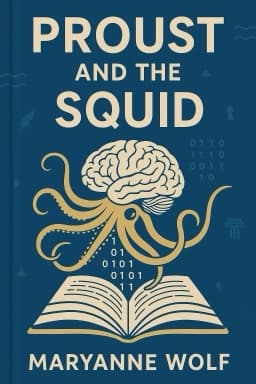
From Clay Tokens to Digital Text: The Epic Evolution of Writing and Reading
How humans invented writing and reading — and how these inventions transformed our brains and societies forever.

Long before books and screens, humans used small clay tokens to keep track of goods and trade. This humble beginning marked the dawn of symbolic communication — a cognitive revolution that would change the course of history. This blog takes you on a journey through the epic evolution of writing and reading, revealing how these inventions transformed our brains and societies.
Early writing systems were complex and cumbersome, consisting of thousands of pictographs and symbols. The Greek alphabet, with its revolutionary inclusion of vowels and reduction to about 24 letters, simplified reading and made literacy more accessible. This innovation not only sped up reading but also stimulated new ways of thinking, philosophy, and culture.
Yet, the rise of literacy was met with ambivalence. Philosophers worried that writing might weaken memory and oral traditions, fearing that reliance on texts could lead to superficial understanding. These debates highlight the profound cultural shifts literacy introduced.
Throughout history, writing and reading have continuously reshaped human cognition, leveraging brain plasticity to adapt to new symbolic systems. Today, as we transition to digital text, we stand on the shoulders of these ancient innovations, facing new challenges and opportunities.
Understanding this rich history enriches our appreciation of reading as a uniquely human achievement — one that connects us across time and space.
For deeper exploration, consult authoritative sources on the history of writing and cognitive neuroscience that shed light on this fascinating evolution.[[0]](#__0) [[1]](#__1) [[3]](#__3)
Want to explore more insights from this book?
Read the full book summary