
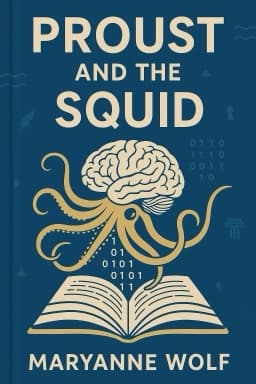
Unlocking the Secret Powers of Your Reading Brain: What You Never Knew
Discover the astonishing neuroscience behind how our brains adapt to reading and why it’s more magical than you think.

Imagine a skill so profound that it rewires your brain, opening doors to new worlds, ideas, and emotions — yet it’s not something you were born to do naturally. Reading is exactly that. Unlike spoken language, which humans evolved to acquire effortlessly, reading is a cultural invention that demands incredible brain adaptability. This blog unravels the astonishing neuroscience behind how our brains learn to read, why it takes years of practice, and what makes this process so uniquely human.
Thousands of years ago, before alphabets existed, humans used small clay tokens to represent goods and ideas. These primitive symbols were the first steps toward writing — a revolutionary leap in communication. The brain, however, had no dedicated reading center. Instead, it repurposed existing neural circuits originally meant for vision and spoken language. This phenomenon, known as neuronal recycling, allowed older brain regions to adapt and recognize written symbols, enabling us to decode words on a page.
One key brain area, the Visual Word Form Area, located in the left occipitotemporal cortex, becomes finely tuned to letters and word patterns through experience. This specialization is critical for fluent reading, allowing us to recognize words rapidly and effortlessly. The brain also uses a dual-route reading system: one pathway decodes words phonetically, sounding out letters, while the other recognizes whole words instantly, facilitating speed and comprehension.
Learning to read is a journey beginning in childhood, where children move from recognizing letters to blending sounds and, eventually, to fluent comprehension. Early exposure to rich language environments significantly boosts this process, while challenges such as dyslexia reveal how differences in brain wiring can affect reading. Yet, dyslexia also showcases the brain’s diversity, with many individuals displaying remarkable creativity and spatial reasoning.
In our modern digital world, reading faces new challenges. Continuous partial attention and fragmented information streams threaten deep comprehension. However, with mindful strategies and balanced instruction, we can preserve the generative, creative essence of reading that has shaped human culture for millennia.
Understanding the reading brain is not just an academic pursuit—it’s a celebration of human ingenuity and resilience. It invites us to cherish and nurture this extraordinary gift, ensuring it continues to flourish in an ever-changing world.
For further insights, explore the detailed research and reflections by experts who have studied the reading brain extensively, including the pioneering work of Maryanne Wolf and others who illuminate how reading transforms us at the neural and cultural levels.[[0]](#__0) [[1]](#__1) [[2]](#__2)
Want to explore more insights from this book?
Read the full book summary