
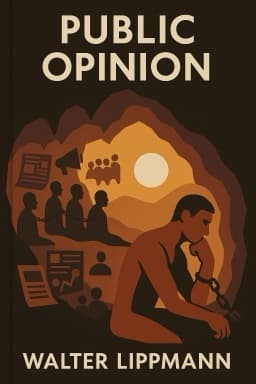
Why Your Newsfeed Might Be Lying to You: The Science Behind Public Opinion
Uncover the economic and psychological forces that shape what you see in the news and how it molds your beliefs.

In today’s fast-paced digital world, we often assume that access to vast amounts of information means we are well-informed. Yet, as Walter Lippmann pointed out nearly a century ago, the reality is far more complicated. The news you consume is the result of numerous filters—economic, psychological, and social—that shape what reaches your eyes and ears.
Newspapers and media outlets operate under tight constraints. They must select news based on what is noticeable, recordable, and reportable within limited space and time. This means slow-moving social trends or complex policy debates often get sidelined in favor of dramatic events and sensational stories. Moreover, advertising revenue heavily influences editorial decisions. Content that might upset advertisers or alienate readers is frequently avoided, creating a subtle but powerful form of bias.
Consider how political conflicts are often reduced to tales of heroes and villains, simplifying complex issues into emotionally charged narratives. This not only makes the news more engaging but also helps mobilize public opinion. However, it risks obscuring the nuanced realities behind the headlines.
Audience preferences also play a crucial role. People tend to focus on local, familiar stories that resonate emotionally, rather than distant or abstract topics. This selective interest shapes media content, creating a feedback loop where popular themes dominate and less sensational but important issues receive scant attention.
Language further complicates communication. News is compressed into brief, coded messages to meet economic and technical demands. Words carry different meanings across cultures and contexts, leading to misunderstandings and emotional misinterpretations.
Understanding these forces is key to developing media literacy. By recognizing that the news is a constructed narrative influenced by many factors, you can approach it with a critical eye, seek diverse sources, and question simplified portrayals.
In an era of misinformation and polarized media landscapes, Lippmann’s insights remain remarkably relevant. They remind us that being informed requires effort beyond passive consumption—engaging actively with the information and the context in which it is presented.
Equip yourself with this knowledge to navigate the news intelligently and participate meaningfully in democratic discourse.
Want to explore more insights from this book?
Read the full book summary