
Why Most of Us Are Wrong About Love (And How to Get It Right)
Unpacking the Myths That Sabotage Modern Relationships—and What to Do Instead

Unpacking the Myths That Sabotage Modern Relationships—and What to Do Instead
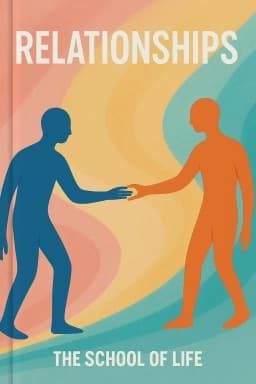
In the modern world, love is everywhere—on screens, in songs, in the whispered hopes of those seeking their soulmate. Yet, for all its omnipresence, love remains deeply misunderstood. The reason? Most of us are following a script we never consciously chose. This script, written by centuries of poets, novelists, and filmmakers, is the legacy of Romanticism. It tells us that the right relationship should be effortless, passionate, and endlessly fulfilling. But as 'Relationships' from The School of Life reveals, this script is not only unrealistic—it’s actively harmful.
Consider the myth of the soulmate: the idea that somewhere out there is a person who will meet all your needs, intuitively understand you, and never let you down. This belief, so deeply embedded in our culture, sets us up for disappointment. When the inevitable conflicts and misunderstandings arise, we don’t see them as normal, but as evidence that we’ve chosen the wrong person. The book shows that, in reality, love is not a matter of luck or fate, but a skill—one that requires patience, self-knowledge, and a willingness to grow.
One of the most powerful insights from the book is that our attractions are not as rational as we think. We are drawn to what feels familiar, often unconsciously seeking out partners who echo the emotional climate of our childhood. This can be a force for good, but it can also lead us to repeat painful patterns. The solution is not to abandon hope, but to become aware of these hidden dynamics, so that we can choose our partners—and our responses—with greater wisdom.
Many of the conflicts that erupt in relationships are not about the present moment, but about old wounds being triggered. The book introduces the concept of 'transference,' where we project feelings and expectations from our past onto our partners. Recognizing this can transform arguments from battles to opportunities for empathy and healing.
Another key lesson is the importance of embracing imperfection. The idea that our partner should be flawless is a recipe for perpetual dissatisfaction. Every strength comes with a corresponding weakness: the creative partner may be disorganized, the calm one may be slow to act. Rather than searching for the impossible, we are better served by learning to appreciate the unique blend of strengths and weaknesses in the person we love.
Perhaps the most radical idea in the book is that love is not just a feeling, but a practice. It is found not in grand gestures, but in the daily routines of life together: sharing chores, listening patiently, and offering reassurance. These small acts, repeated over time, are the true foundation of intimacy.
By letting go of the myths of Romanticism and embracing a more realistic, compassionate vision of love, we can transform our relationships. We become less likely to blame, more willing to forgive, and better equipped to weather the inevitable storms. In the end, the book offers hope—not for fairy-tale perfection, but for something far more valuable: the deep, abiding joy that comes from loving and being loved, flaws and all.
References: The School of Life book, various relationship psychology articles, and modern relationship advice columns. 1 2 3
Want to explore more insights from this book?
Read the full book summary