
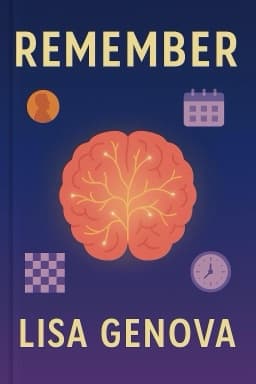
Unlocking Your Brain’s Secrets: How Memory Really Works and Why You Forget
Discover the fascinating science behind your memories and why forgetting is actually a superpower.

Memory is one of the most astonishing abilities of the human brain. Every day, your brain performs a miraculous feat — transforming fleeting sensory experiences into lasting impressions that shape who you are. But how exactly does this happen? And why do we sometimes forget things so easily? In this comprehensive exploration, we will uncover the science behind memory formation, the crucial role of attention, the fleeting nature of working memory, and the fascinating phenomenon of muscle memory.
The Miracle of Memory Formation
Making a memory literally changes your brain. When you experience something — like a sunset on a beach or the laughter of a child — your brain physically alters connections between neurons in a process called encoding. The hippocampus acts as the memory weaver, linking sights, sounds, smells, and emotions into a coherent whole. This process unfolds through encoding, consolidation, storage, and retrieval, allowing you to relive moments vividly. Remarkably, the brain’s capacity for memory is nearly limitless, storing vast amounts of information across distributed neural networks rather than a single location.
Attention: The Gateway to Memory
You can’t remember what you never paid attention to. Our senses are flooded with information, but only what we consciously focus on gets encoded into memory. Multitasking and distraction impair this process, leading to absent-mindedness. Routine dulls attention, which is why many daily experiences slip away unnoticed. Mindfulness and focused attention are powerful tools to enhance memory formation.
Working Memory: Living in the Present
Working memory holds what you are consciously aware of right now, but only briefly — about 15 to 30 seconds for around 7 items. It acts as a mental scratchpad, essential for following conversations, understanding sentences, and performing mental calculations. Chunking information into meaningful groups can expand working memory’s capacity, making it easier to remember complex data.
Muscle Memory: The Brain’s Silent Choreographer
Muscle memory is not stored in muscles but in brain areas like the basal ganglia and cerebellum. It enables automatic execution of skills learned through repeated practice, freeing conscious resources. Whether skiing, playing piano, or typing, muscle memory allows you to perform complex movements effortlessly and unconsciously.
Semantic Memory: Your Brain’s Encyclopedia
Semantic memory stores facts and knowledge disconnected from personal context — you know the capital of France but don’t remember when you learned it. Spaced repetition and self-testing are powerful strategies to enhance semantic memory retention, and mnemonic devices or visual imagery can make learning more effective.
Episodic Memory: The Stories That Make Us
Episodic memory holds personal experiences filled with emotion and context. These memories are reconstructive, meaning they change subtly each time you recall them. Emotion strengthens these memories by activating the amygdala, which enhances consolidation in the hippocampus. Episodic memory tends to decline with age but remains a core part of identity.
The Art and Science of Forgetting
Forgetting is not a flaw but a feature. It prevents cognitive overload by pruning unused connections and allows the brain to focus on what matters. The forgetting curve shows rapid early loss of memories unless reinforced. Memory is also malleable, leading to distortions and false memories, which are normal aspects of human cognition.
Stress and Sleep: Twin Pillars of Memory Health
Chronic stress harms memory by shrinking the hippocampus through elevated cortisol, impairing neurogenesis and connectivity. Conversely, sleep consolidates memories by replaying and strengthening neural pathways during REM and deep sleep stages. Sleep deprivation increases risk for cognitive decline and diseases like Alzheimer’s. Managing stress and prioritizing restorative sleep are essential for memory health.
Embracing the Memory Paradox
Memory is both powerful and fallible. Recognizing this duality reduces anxiety about forgetfulness. A positive mindset enhances memory performance, and using external aids like calendars and smartphones supports prospective memory without harm. Self-compassion and acceptance of memory’s limits foster resilience and well-being.
Understanding these facets of memory — from formation to forgetting, from conscious recall to unconscious skills — empowers you to nurture your brain’s incredible capabilities. Embrace your memory’s strengths and quirks with curiosity and kindness, and you will enrich your life’s journey.
For further insights, recent neuroscience studies continue to uncover the brain’s complexity, including the largest human brain cell atlas, the impact of group size on cooperation, and the role of sleep in memory consolidation and amyloid clearance, underscoring the dynamic and evolving nature of memory science. 1 2 3 4
Want to explore more insights from this book?
Read the full book summary