
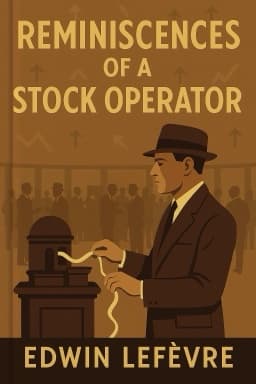
Trading Secrets From a Century Ago: Why ‘Reminiscences of a Stock Operator’ Still Outperforms Modern Guides
What a 1923 Bestseller Teaches That Modern Trading Books Miss

What a 1923 Bestseller Teaches That Modern Trading Books Miss
In a world awash with trading books, why does a 1923 classic still stand at the top of every serious investor’s reading list? Reminiscences of a Stock Operator endures because it addresses what truly matters: the human side of trading. While modern guides are filled with charts, formulas, and the latest strategies, Livermore’s story focuses on the eternal truths of speculation—discipline, patience, and the mastery of one’s own mind.
The book’s narrative style is its secret weapon. Instead of dry instruction, it immerses readers in the drama of Livermore’s life, making abstract concepts tangible. We see how he navigated the temptations of tips, the pressure of the crowd, and the agony of loss. Each chapter is a lesson in psychology, not just strategy.
Modern trading guides often overlook the importance of self-discipline and emotional control. Livermore’s insistence on cutting losses, letting profits run, and avoiding the herd remains unmatched in its clarity and impact. These principles are as vital now as they were a century ago.
Ultimately, the book’s greatest gift is perspective. It reminds us that markets are driven by human behavior, not just numbers. By understanding ourselves, we gain the edge over those who rely solely on technology. That’s why, for all the advances in trading, the wisdom of Reminiscences of a Stock Operator is more valuable than ever.
If you want to thrive in today’s markets, start with the lessons that have stood the test of time. 1 4
Want to explore more insights from this book?
Read the full book summary