
Why Being Busy is the New Religion—and How It’s Secretly Draining Your Soul
Discover how our obsession with constant activity has replaced faith and meaning in today’s world—and what you can do to reclaim your peace.

Have you ever noticed how 'busy' has become the default answer to 'How are you?' In today’s culture, busyness isn’t just a state; it’s a status. It signals importance, value, and justification for existence. But beneath this frenetic pace lies a quiet crisis—one where our identity is so tightly bound to what we do that rest feels like failure.
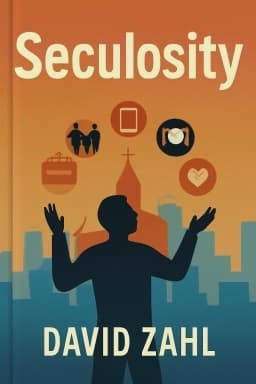
David Zahl, in his groundbreaking work 'Seculosity,' calls this phenomenon performancism—the assumption that doing equals being. Every achievement, task, and accolade becomes a rung on the ladder of self-worth. The problem? The ladder has no top. No matter how high we climb, the need to prove ourselves only grows stronger.
Consider the story of a competitive gamer whose identity was inseparable from his high scores. When challenged, victory brought paranoia instead of peace—a vivid example of how performancism traps us in a cycle of anxiety. Social media compounds this by offering endless curated successes from peers, intensifying feelings of inadequacy. This phenomenon, sometimes called 'Penn Face,' pressures us to appear perfect even when struggling inside.
Yet, amidst this chaos, there is hope. Stories of people who find rest not in doing more but in accepting less remind us that busyness is not the only path. Slowing down, embracing grace, and redefining worth beyond productivity are radical acts that restore peace and meaning.
If you’ve ever felt overwhelmed by the relentless demands of modern life, this exploration will help you see busyness not as virtue but as a symptom—and point toward a way out.
Ready to dive deeper? Next, we’ll explore how the pressures of performancism infiltrate our most intimate relationships—romance—and the heavy burden of the soulmate myth.
Sources: Amazon, Goodreads, Broadleaf Books, BeFreed.ai 1 2 3 4
Want to explore more insights from this book?
Read the full book summary