
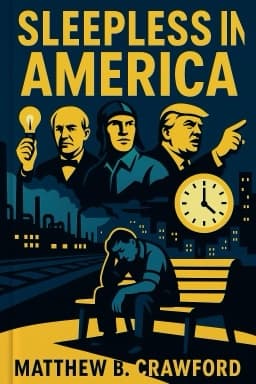
Sleepless America: How Work, Race, and Gender Shaped Our Nightless Nation
A deep dive into the social forces that made sleeplessness a national epidemic.

The history of sleep deprivation in America is inseparable from the history of labor, law, and social hierarchy. At the dawn of the 20th century, as factories and railroads expanded, the state began to intervene in workers’ lives—but with striking gendered limitations. Laws like those upheld in Muller v. Oregon protected women from night work and long hours based on health and reproductive concerns. However, similar protections were denied to men, justified by legal doctrines emphasizing private contract freedom and assumptions about male strength.
This selective protection reflected and reinforced societal views about gender roles: women as fragile caretakers needing safeguarding, men as robust breadwinners expected to endure hardship. The result was a labor market where men often faced brutal schedules, such as the 12-hour, 7-day workweeks in steel mills, while women’s work was circumscribed.
Race added another layer of complexity. African American Pullman porters, serving wealthy passengers on luxury trains, were subjected to extreme overwork and sleep deprivation under a system that used rest denial as a tool of racial control. Their unionization through the Brotherhood of Sleeping Car Porters was a landmark in labor and civil rights history, challenging both economic exploitation and racial discrimination.
These stories reveal how sleep deprivation is not merely a biological or personal problem but a social one, shaped by laws, cultural attitudes, and power relations. Recognizing these intersections is essential to understanding the persistence of sleeplessness as a public health crisis and a marker of inequality.
As we confront contemporary challenges of overwork and fatigue, this history offers critical insights into how social justice and health are intertwined, and how equitable rest requires structural change.
Sources: Dangerously Sleepy by Will Meyerhofer, Sleep’s Hidden Histories - LARB Review, Why We Sleep by Matthew Walker 1 3 2
Want to explore more insights from this book?
Read the full book summary