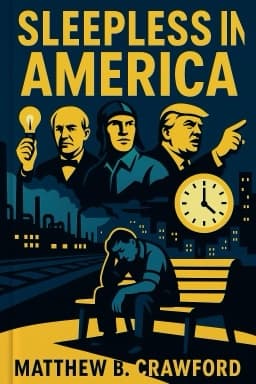
Matthew B. Crawford
An in-depth cultural and historical study of sleep deprivation and overwork in America, revealing its roots, impacts, and struggles for reform.
Thomas Edison claimed he only needed four hours of sleep a night and advocated for reducing sleep time for all Americans.
2 more facts available in the app
Section 1
10 Sections
In the vast tapestry of American cultural history, the idea that
Consider the legendary figure who perhaps did more than anyone else to embody this myth: a tireless inventor whose name is synonymous with innovation and relentless work—the man who brought electric light to the world. His claim to fame was not only his inventions but also his ability to function on astonishingly little sleep.
Yet, this was not the first or only voice in the chorus. Decades earlier, a founding father and polymath had extolled the virtues of waking early and going to bed early, linking these habits to health, wealth, and wisdom. His advice, while advocating moderation, also carried a sharp edge:
The heroic narrative of sleeplessness found dramatic expression in the story of a young aviator who dared to cross the Atlantic alone, flying through the night with no rest. His feat captured the imagination of a nation and the world, portraying sleepless endurance as a form of courage and mastery over nature's limits. The press and public alike were fascinated not only by the technical achievement but by the pilot’s ability to resist the seductive pull of sleep in the face of mortal danger.
These narratives were not confined to individuals but permeated the broader culture, influencing how men measured their worth and how society rewarded effort. Sleep became a contested terrain where strength, discipline, and success were demonstrated by how little one succumbed to rest. This cultural attitude shaped workplace norms, social expectations, and even scientific discourse, as psychologists and self-help authors began to argue that most people sleep more than necessary and could train themselves to function on less.
However, beneath the surface of these heroic tales lay an unspoken reality: chronic sleep deprivation exacted a toll on health, well-being, and social relations. Yet the dominant narrative left little room for acknowledging these costs, framing sleep as a choice rather than a biological necessity. This myth of sleeplessness as strength set the stage for the struggles and contradictions explored in the chapters that follow, where the lives of workers, marginalized groups, and the broader society reveal the complex interplay between cultural ideals and lived experience.
As we move forward, we will delve into how these cultural myths intersected with public policy, labor struggles, and the realities of industrial work, uncovering the tensions between the glorification of sleeplessness and the need for rest. The next section will explore how the state’s response to overwork and sleep deprivation was limited, gendered, and often contradictory, shaping the conditions under which millions labored and rested—or failed to rest.
Which figure famously claimed to need only four hours of sleep daily?
19 more quizzes available in app
American culture historically glorified minimal sleep as a virtue linked to masculinity and success.
8 more insights available in app
Unlock all 10 sections, 9 insights, full audio, and interactive mind map in the SnapBooks app.
Uncover the shocking truth behind America’s obsession with sleeplessness and how it shaped our health and society.
Read articleA deep dive into the social forces that made sleeplessness a national epidemic.
Read article