
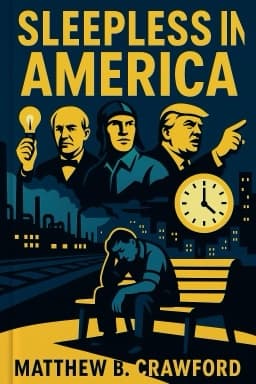
Why America’s Sleepless Culture Is Killing Us: The Hidden History of Sleep Deprivation
Uncover the shocking truth behind America’s obsession with sleeplessness and how it shaped our health and society.

Sleep is often described as a luxury in modern American life, yet this view is not a natural truth but a cultural construction with profound consequences. The story begins in the late 19th and early 20th centuries when industrialization demanded relentless productivity. Icons like Thomas Edison, who famously claimed to sleep only four hours a night, became symbols of a new work ethic that equated wakefulness with masculinity and success.
Yet, this myth had darker implications. The steel mills of the early 1900s imposed brutal 12-hour shifts seven days a week, often requiring 'long turn' 24-hour double shifts that devastated workers’ health and sleep. These grueling schedules were not anomalies but standard practice, enforced by employers and normalized by society. Compounding this was the gendered nature of labor laws: women were afforded limited protections based on reproductive health concerns, while men were largely left exposed to overwork and sleep deprivation under the guise of private contracts.
Racial dynamics further complicated the picture. African American Pullman porters endured extreme overwork with little rest, their sleep deprivation used as a tool of control within a segregated labor system. Their courageous unionization efforts marked a significant advance in recognizing sleep deprivation as a labor and health issue, intertwining labor rights with civil rights struggles.
Medical professionals, too, lived the sleepless myth. Long shifts, overnight calls, and cultural expectations of endurance led to tragic errors and reforms only after public outcry. The death of a young patient due to resident fatigue sparked limits on work hours, yet debates about balancing training and rest continue.
Scientific revelations have since exposed the lethal consequences of chronic sleep deprivation—from animal studies showing death faster than starvation to links between shift work and heart disease. Despite this, modern corporate culture often celebrates sleeplessness as a competitive advantage, with executives boasting of minimal rest and early mornings. This glorification perpetuates unhealthy norms that jeopardize well-being.
The journey through these stories highlights the urgent need to rethink our cultural relationship with sleep. It is not weakness but strength to honor rest, a foundation for health, productivity, and dignity. As awareness grows, new workplace policies, changing masculinity norms, and technological tools offer hope for a future where sleep is valued as essential, not optional.
Understanding this history empowers us to challenge harmful myths and build healthier societies. It is time to wake up to the truth about sleep and reclaim the rest we deserve.
Sources: Dangerously Sleepy by Will Meyerhofer, Why We Sleep by Matthew Walker, Sleep’s Hidden Histories - LARB Review 1 2 3
Want to explore more insights from this book?
Read the full book summary