
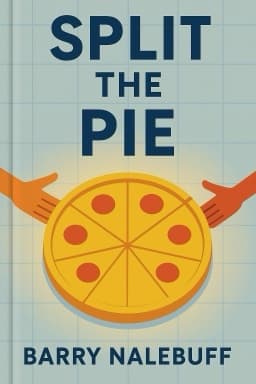
The Hidden Power of Fairness: How ‘Split the Pie’ Rewrites the Rules of Negotiation
Explore why fairness isn’t just ethical — it’s your strongest negotiation weapon.

Fairness is often dismissed as a soft value in the hard world of negotiation. Yet, ‘Split the Pie’ demonstrates that fairness is not just ethical — it is your strongest strategic weapon.
When parties share the incremental value created by cooperation fairly, it balances power dynamics and reduces conflict. This fosters trust, making agreements more durable and relationships more productive.
Contrary to popular belief, having a better fallback option (BATNA) does not grant greater power inside the negotiation. Both parties contribute equally to creating value, meaning power is symmetrical. Recognizing this dispels myths that lead to aggressive tactics or unfair demands.
Fairness also encourages transparency and openness, essential for navigating complex or multi-party negotiations. It provides a principled basis to resolve disputes and allocate costs or gains equitably.
Consider a scenario where two companies share infrastructure costs. By focusing on the savings created rather than proportional usage, they achieve a fair split that satisfies both parties and avoids resentment.
Leaders who embrace fairness in negotiation not only secure better deals but also build reputations for integrity and collaboration — invaluable assets in any field.
Key takeaway: Fairness is not a concession; it is a foundation for power, trust, and long-term success.
Sources: 2 , 3 , 4
Want to explore more insights from this book?
Read the full book summary