
Unlocking the Evolutionary Magic of Friendliness: From Foxes to Human Empathy
A deep dive into how friendliness rewired evolution and why it’s the key to understanding ourselves.

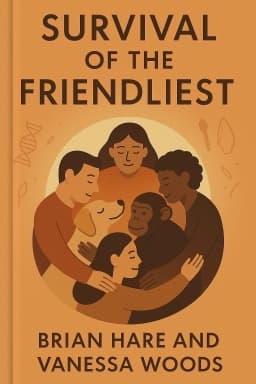
Evolutionary biology reveals a fascinating narrative: friendliness has been a secret architect of survival and success. The fox domestication experiment shows how selecting for tameness alone can alter an animal’s appearance and behavior, producing traits collectively known as domestication syndrome.
Bonobos and chimpanzees, our closest relatives, offer contrasting social blueprints. Bonobos’ peaceful, female-led societies rely on cooperation and sexual bonding to maintain harmony, while chimpanzees exhibit aggressive dominance and territoriality. These differences illustrate how friendliness and aggression represent alternative evolutionary strategies.
Humans have undergone a process of self-domestication, evolving reduced aggression and enhanced social cognition. Fossil evidence shows changes in facial structure that mirror domesticated animals. This shift enabled the formation of large, complex social networks and cultural innovation.
Yet, the same neural circuits that enable empathy can be suppressed, allowing dehumanization and cruelty, especially in political contexts. This paradox is a challenge for modern societies facing polarization and conflict.
Research confirms that sustained positive contact and friendship across social divides reduce prejudice and promote peace. These insights are essential for strengthening democracy, which depends on cooperation and trust.
By embracing friendliness and expanding our empathy, we can build resilient, inclusive societies capable of meeting today’s challenges and securing a hopeful future.
References:
: Fox domestication studies
: Primate social behavior and neuroscience
: Human evolutionary anthropology
: Social psychology of intergroup contact
: Political science on democracy and polarization
Want to explore more insights from this book?
Read the full book summary