
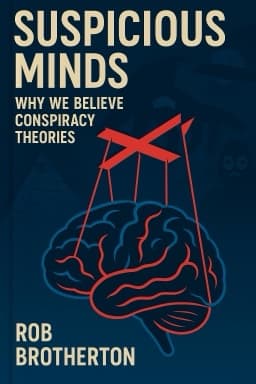
Unmasking the Mind: Why We Can’t Resist Conspiracy Theories
Explore the deep psychological roots that make conspiracy theories so irresistible and how they shape our worldview.

Imagine a world where every unexpected event, every tragedy, and every political upheaval is not random or accidental but the result of a secret plot by powerful forces. This is the lens through which conspiracy theories invite us to see the world. But why are these stories so compelling? The answer lies deep within the architecture of our minds.
The Ancient Roots of Conspiratorial Thinking
Long before the internet or social media, humans were already weaving tales of hidden agendas and secret cabals. When Rome burned, many suspected the emperor’s hand. During plagues, entire communities were scapegoated with baseless accusations. These narratives helped people make sense of chaos and uncertainty, providing villains to blame and heroes to admire.
Our Brain’s Pattern-Seeking Nature
At the heart of conspiratorial belief is the brain’s powerful drive to find patterns—even when none exist. Psychological studies show that when people feel ambivalent or uncertain, they are more likely to see meaningful connections in random noise. This craving for order is a survival mechanism, but it can also lead us astray. Even the font in which information is presented can influence how believable it seems, demonstrating how subtle biases shape our judgments.
The Anatomy of a Conspiracy Theory
Conspiracy theories share common traits: they portray conspirators as unusually competent and evil, assume nothing is as it seems, and are structured to be unfalsifiable. Any evidence against them is often seen as proof of a deeper cover-up, creating a self-sealing logic that resists refutation. This makes them incredibly resilient and difficult to dismantle.
Who Believes and Why?
Contrary to stereotypes, conspiracy believers come from all walks of life—across genders, ages, education levels, and political affiliations. Psychological traits like paranoia, distrust, and feelings of powerlessness increase susceptibility, but no single profile fits all. Social context, such as political ideology and experiences of marginalization, also plays a crucial role.
The Real-World Impact
While some conspiracy beliefs might seem harmless, others have fueled violence, public health crises, and political disengagement. Anti-vaccine conspiracies have led to disease outbreaks, and extremist acts have been motivated by conspiratorial worldviews. Recognizing these consequences underscores the importance of addressing conspiracism thoughtfully.
The Emotional and Cultural Appeal
Conspiracy theories provide emotionally satisfying narratives that fulfill needs for meaning, control, and social belonging. They frame complex realities into simple good-versus-evil stories, creating cultural touchstones that unite believers and offer psychological comfort.
The Challenges of Correction
Correcting conspiracy beliefs is challenging due to cognitive biases like confirmation bias and the backfire effect, where contradictory facts can strengthen false beliefs. Effective engagement requires empathy, respect, and building trust rather than confrontation.
Embracing Our Suspicious Minds
Ultimately, recognizing that our brains are wired to seek patterns and meaning—even to our detriment—can foster self-awareness and compassion. Education, critical thinking, and empathetic communication are key to building resilience against misinformation and fostering a more informed society.
Conspiracy theories are as old as humanity itself, woven into the very way we think and relate to the world. By understanding their roots and mechanisms, we can better navigate the complex information landscape of today and build bridges of understanding rather than walls of suspicion.
For further reading and deeper exploration, consider authoritative works on the psychology of conspiracism and social dynamics, including recent research highlighting the interplay of cognitive biases and social identity in belief formation.
Want to explore more insights from this book?
Read the full book summary