
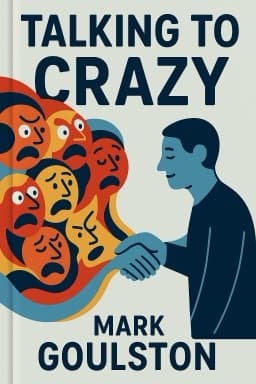
Unlocking the Secrets to Talking to Crazy: Why Leaning In Can Save Your Sanity
Discover the surprising power of leaning into irrationality and transforming conflict into connection.

Every day, we encounter people whose behavior seems irrational, unpredictable, or downright 'crazy.' Whether it’s a hostile driver, a demanding boss, or a family member in emotional turmoil, interacting with irrational individuals can feel like walking through a minefield. But what if the key to managing these encounters isn’t confrontation or avoidance, but leaning in with empathy and assertive submission?
Mark Goulston’s Talking to Crazy introduces a revolutionary concept: when faced with irrational aggression, pushing back only escalates the conflict, but leaning into the other person’s craziness—putting them 'in charge'—disarms hostility and opens the door to dialogue. This technique, inspired by animal behavior, taps into our brain’s survival instincts. Like dogs signaling submission to avoid fights, humans respond to assertive submission by lowering defenses.
But why do people act irrationally in the first place? The book dives into the triune brain model: the reptilian brain governs survival instincts, the paleomammalian brain handles emotions, and the neomammalian brain manages logic. When these brains become misaligned—often due to childhood experiences like criticism or neglect—irrational behavior emerges as a survival mechanism.
Understanding the nine common behavioral patterns or Modus Operandi (M.O.s) of irrational people—from emotional outbursts to manipulative neediness—equips you to anticipate and respond effectively rather than react impulsively. For example, recognizing a 'Know-It-All' M.O. helps you avoid taking their condescension personally and instead respond with calm confidence.
Equally important is knowing when to engage and when to walk away. The DNR method—Do Not React, Do Not Respond, Do Not Resuscitate—helps you disengage from toxic interactions without feeding the fire. Walking away isn't weakness; it’s self-preservation.
Moreover, the book emphasizes facing your own internal craziness—your emotional baggage and triggers. By identifying and neutralizing your 'buttons,' you reduce the fuel irrational people need to hijack your emotions.
Maintaining poise under fire is another critical skill. Techniques like mental reframing and visualization help you resist the amygdala hijack—the brain’s fight-or-flight override—keeping you calm and clear-headed during attacks.
When setbacks happen, the 72-hour rule encourages waiting before reacting, allowing emotions to settle. Sincere apologies, even when you feel wronged, can defuse tension and rebuild trust.
The book also shares fourteen practical tactics, including the Belly Roll and A-E-U (Apologize, Empathize, Uncover), tailored to different M.O.s and situations, empowering you to navigate the unpredictable terrain of irrationality with confidence.
Finally, the most challenging arena is personal relationships, where mutual craziness can escalate conflicts. Knowing when to seek professional help for mental illness or personality disorders is vital to protect yourself and loved ones.
In summary, Talking to Crazy offers a compassionate, science-backed roadmap to transform chaos into connection, preserve sanity, and foster healthier relationships. Whether you’re dealing with a difficult coworker or a loved one in crisis, these insights can change how you communicate forever.
Ready to lean into crazy and come out stronger? Let’s dive deeper into these life-changing strategies.
Sources: Blinkist summary, Lifeclub.org review, YouExec.com analysis, JillCoil.com book review 1 2 3 4
Want to explore more insights from this book?
Read the full book summary