
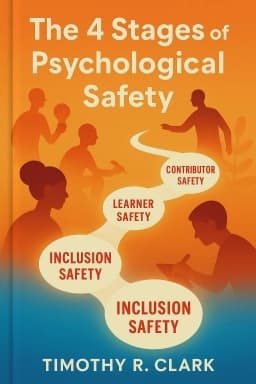
Article from Book Summary
7 Proven Ways to Build Psychological Safety That Leaders Don’t Tell You
Unlock actionable strategies to create a culture of trust and innovation in your organization.

Viktor Petrov
May 22, 2025259 views
The 4 Stages of Psychological Safety: Defining the Path to Inclusion and InnovationTimothy R. Clark
Psychological safety is the secret sauce behind high-performing teams, yet many leaders struggle to create it intentionally. Here are seven proven strategies to help you build a culture where people feel safe, valued, and empowered:
- Model Vulnerability: Share your own mistakes and uncertainties to normalize imperfection and invite openness.
- Encourage Curiosity and Questions: Create rituals like 'question of the day' to promote learner safety and reduce fear of failure.
- Balance Autonomy and Accountability: Grant contributor safety by trusting your team while setting clear expectations and follow-up.
- Welcome Constructive Dissent: Foster challenger safety by inviting diverse opinions and protecting those who challenge norms.
- Build Trust Through Consistency: Follow through on commitments and communicate transparently to reduce social friction.
- Manage Conflict with Empathy: Distinguish between intellectual and social friction, guiding debates respectfully.
- Embed Safety in Culture: Use stories, rituals, and norms to reinforce psychological safety as a core value.
Implementing these strategies requires patience and persistence but yields profound benefits in engagement, innovation, and resilience.
These approaches align with contemporary leadership research and best practices highlighted by Forbes and LinkedIn experts 4 3 .
Want to explore more insights from this book?
Read the full book summary