
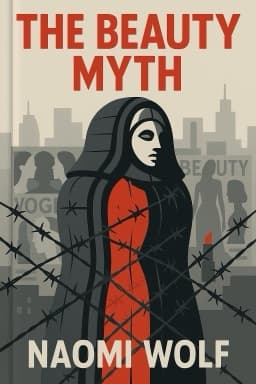
Unmasking the Phantom: How The Beauty Myth Controls and Liberates Women
Discover the hidden forces behind beauty standards and how they shape women's lives in profound and often invisible ways.

Imagine a phantom that haunts millions of women worldwide — not a ghost in the traditional sense, but an idea so powerful it shapes lives, decisions, and self-worth. This phantom is the beauty myth, a cultural construct that dictates impossible standards of appearance, serving as a mechanism of social control. Naomi Wolf's seminal work, The Beauty Myth, reveals how these standards are neither natural nor benign but are deeply embedded in political, economic, and cultural systems designed to limit women's freedom.
At the heart of the beauty myth lies a paradox: as women gain more rights and social power, the pressure to conform to ever more exacting beauty ideals intensifies. This backlash functions covertly, channeling women's energies into appearance maintenance rather than activism or professional advancement.
One striking example is the Professional Beauty Qualification (PBQ), where women's appearance becomes a formal job requirement, often legally upheld. From waitresses dismissed for losing their 'Bunny Image' to television anchors fired for being 'too old' or 'unattractive,' the workplace becomes a battleground of appearance politics. Men, in contrast, rarely face such scrutiny, highlighting a stark double standard.
The media plays a crucial role in perpetuating the beauty myth. Women's magazines, once platforms for domestic advice, evolved into arenas dominated by diet tips, beauty product advertising, and anti-aging strategies. These magazines thrive on emotional ambivalence, inspiring hope while simultaneously fostering shame and insecurity.
Beauty rituals themselves take on a quasi-religious significance, with women engaging in acts of cleansing, adornment, and penance that mirror spiritual rites. The female body is framed as inherently flawed, requiring constant purification, which fuels cycles of indulgence and punishment. This ritualization enforces internalized discipline and guilt, sustaining the myth’s power.
The costs of maintaining beauty standards are profound. Women often work double or triple shifts—combining paid employment, unpaid domestic labor, and the exhausting labor of appearance upkeep. Financially, up to a third of some professional women's income goes toward clothing, makeup, fitness, and cosmetic procedures. Emotionally and physically, this leads to fatigue, stress, and diminished capacity for activism.
Moreover, the beauty myth fosters rivalry and isolation among women by framing beauty as a scarce resource. Generational divides deepen alienation, weakening solidarity and collective resistance. Politically, the myth serves as a tool to maintain male dominance, supported by laws and economic systems that legitimize appearance-based discrimination.
Interestingly, the male beauty myth is emerging as men increasingly face appearance pressures, reflected in rising cosmetic surgeries and grooming industries. This shift signals changing gender dynamics but also illustrates the pervasive reach of appearance-based control.
Yet, resistance is growing. Media literacy, body positivity, and intersectional feminist activism challenge the myth’s hold, promoting diverse representations and self-love. The future holds promise for a world where beauty is inclusive, empowering, and free from oppressive standards.
Understanding The Beauty Myth equips us to recognize the phantom for what it is and to reclaim our freedom from its chains. It invites us to build solidarity, embrace diversity, and envision a society where worth is not measured by appearance but by humanity and dignity.
Want to explore more insights from this book?
Read the full book summary