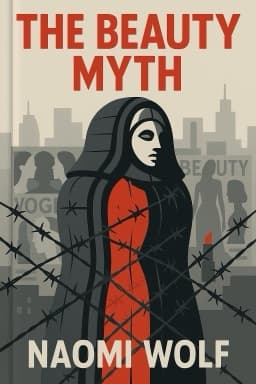
Naomi Wolf
A seminal feminist critique revealing how societal beauty standards serve as a tool of control against women, undermining their progress and self-worth.
Naomi Wolf’s 'The Beauty Myth' was published in 1991 and quickly became a bestseller, sparking widespread discussion about beauty standards and feminism.
2 more facts available in the app
Section 1
10 Sections
Imagine a phantom, not one made of flesh and bone, but a spectral idea that haunts the lives of millions of women. This phantom is the beauty myth — a set of impossible standards that dictate how women must look to be valued.
The beauty myth emerged most strongly after the Industrial Revolution, when women began to gain material freedoms and political rights. As women pushed forward, this myth intensified — a backlash to undermine their progress by channeling their energies into the pursuit of physical perfection.
Behind this myth lies a powerful economic engine. The diet industry alone generates $33 billion annually, while cosmetics and cosmetic surgery rake in tens of billions more. These industries thrive on women’s insecurities, selling hope alongside products, and ensuring that the phantom remains alive and well.
Consider the example of breast implant surgeries, which became widespread as a response to new beauty anxieties fueled by pornography’s influence on fashion. When the dangers of silicone implants became known, legal actions halted the market, and anxiety about breast size diminished. This shows how economic interests and cultural anxieties intertwine to sustain the beauty myth.
Yet, this phantom is difficult to fight because it is intangible.
As we begin our journey through this audiobook, remember that what you will hear is not condemnation but illumination. Understanding the beauty myth is the first step toward reclaiming freedom and self-love.
What is the primary nature of the beauty myth according to the audiobook?
19 more quizzes available in app
Beauty standards are a form of social control used to limit women's freedom.
8 more insights available in app
Unlock all 10 sections, 9 insights, full audio, and interactive mind map in the SnapBooks app.
Discover the hidden forces behind beauty standards and how they shape women's lives in profound and often invisible ways.
Read articleDelve deep into the economic and political machinery that keeps beauty myths alive and profitable.
Read article
Mary Wollstonecraft
Jaclyn Friedman

Chimamanda Ngozi Adichie
Rebecca Solnit
