
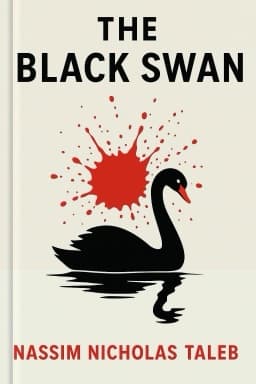
How ‘The Black Swan’ Exposes the Lies We Tell Ourselves About Risk
Unmasking the cognitive illusions that blind us to real risks and how to protect yourself.

The Cognitive Illusions Behind Risk Mismanagement
We like to believe that risk is measurable and predictable. Yet, as Nassim Taleb explains, our minds are wired to deceive us.
Confirmation bias compounds this problem by making us seek only information that supports our beliefs. In finance, this leads to overconfidence and ignoring warning signs. The 2008 financial crisis is a stark example of how these biases can cause systemic failure.
Why Prediction Often Fails
The problem of induction reminds us that no amount of past data guarantees future accuracy. The story of the turkey fed daily until the day it isn’t illustrates the peril of assuming stability. After crises, hindsight bias convinces us that the events were foreseeable, but this is a comforting illusion.
Extremistan: A World Where Extremes Rule
Many domains, such as wealth and book sales, belong to Extremistan, where a single event can dominate outcomes. Traditional risk models based on Mediocristan’s mild randomness fail spectacularly here. Understanding this distinction is crucial for managing real-world risks.
Building Robustness Against the Unknown
Taleb’s barbell strategy offers a way out: combine extreme safety with aggressive risk-taking to minimize losses and maximize gains. Robust systems—those with redundancy and flexibility—can absorb shocks and survive Black Swans.
Conclusion: Breaking Free from Illusions
By understanding our cognitive biases and the nature of randomness, we can better prepare for uncertainty. Embracing epistemic humility and robust strategies helps us navigate a world full of surprises.
Learn to see risk clearly and protect yourself from the unseen giants.
Want to explore more insights from this book?
Read the full book summary