
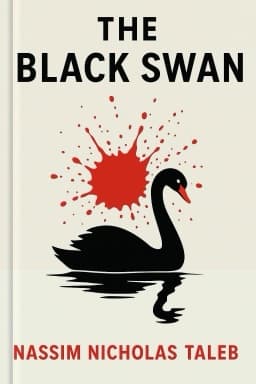
Why ‘The Black Swan’ Will Change How You See the World Forever
Discover the hidden forces shaping our reality and how embracing uncertainty can transform your life.

Unveiling the Power of the Unpredictable
Imagine a world where everything you believe about the future is shaped by what you have seen in the past. We live under the comforting illusion that history moves predictably, but in reality, rare and unpredictable events—Black Swans—explain almost everything significant in our lives. These are not just anomalies but the forces behind the rise and fall of empires, technological revolutions, and market crashes. Yet, our brains are wired to ignore these giants, focusing instead on the mundane and expected.
Our minds create stories to explain these rare events only after they happen, giving us a false sense of understanding. This retrospective predictability blinds us to true uncertainty and makes us underestimate the frequency and impact of Black Swans. For example, no one predicted the internet revolution or the 2008 financial crisis with certainty, yet these events reshaped the world profoundly.
The Mind’s Mirage: Cognitive Biases That Deceive Us
We are natural storytellers, craving patterns and causality. This narrative fallacy leads us to invent explanations for randomness, simplifying complexity but blinding us to true uncertainty. Confirmation bias further traps us, making us seek information that confirms our beliefs and ignore contradictory evidence. Such biases reinforce false confidence and deepen ignorance about rare events.
Two Worlds of Randomness: Mediocristan vs Extremistan
Taleb divides randomness into two domains. Mediocristan is where individual events have limited impact—like human height or weight—and averages are stable. Extremistan, however, is dominated by extreme events where a single occurrence can disproportionately influence the whole, such as wealth distribution or book sales. Misunderstanding which domain we inhabit leads to grave errors in risk assessment.
The Illusion of Prediction: Why the Future Will Surprise You
Despite our desire to forecast and control, the problem of induction shows that past observations do not guarantee future outcomes. The classic turkey example illustrates this: fed daily, the turkey believes it will always be safe—until the day it isn’t. After events happen, hindsight bias convinces us they were predictable, but this is an illusion. Accepting the limits of prediction fosters humility and resilience.
Building Resilience: Thriving Amid Uncertainty
Taleb advocates not trying to predict Black Swans but preparing for them. The barbell strategy balances extreme caution with aggressive risk-taking, minimizing downside while maximizing upside. Robust systems withstand shocks by embracing redundancy, simplicity, and flexibility. Like a tree bending in a storm, resilience is key to navigating an unpredictable world.
Society’s Blindness and Epistemic Humility
Societies often reward visible success but ignore silent prevention, increasing vulnerability to disasters. Recognizing our ignorance—epistemic humility—is essential. Our minds resist uncertainty, but accepting what we don’t know opens doors to better decisions and adaptability.
Amor Fati: Embracing Life’s Unpredictability
Finally, Taleb calls us to amor fati, the love of fate. By embracing uncertainty and unpredictability, we transform fear into empowerment and creativity. Life’s greatest gifts often come from the unexpected. The Black Swan is not just an event but a teacher, inviting us to rethink knowledge, embrace humility, and live boldly.
Embrace uncertainty, cultivate resilience, and let the Black Swan guide you to a richer, wiser life.
Want to explore more insights from this book?
Read the full book summary