
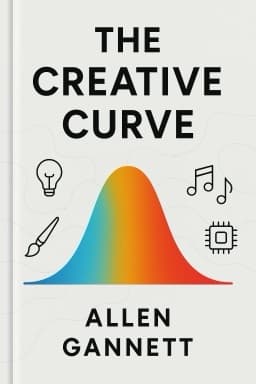
The Surprising Truth About Creativity: Why You’re Not Waiting for Inspiration, You’re Waiting for the Creative Curve
Unlocking the Science Behind Creative Success and Why Waiting for Inspiration is Holding You Back

For decades, the popular narrative about creativity has been that of the elusive genius struck by sudden inspiration — a lightning bolt of brilliance that only a gifted few can harness. Allen Gannett’s The Creative Curve challenges this romanticized myth, revealing that creativity is not a mystical gift but a structured, learnable process. In fact, creativity thrives when we understand and work within what he terms the 'creative curve' — a bell-shaped relationship between familiarity and novelty that governs how ideas are received and embraced.
Gannett opens with the story of how the iconic song 'Yesterday' was born not from a single flash of genius but from nearly two years of painstaking work and iteration. The melody, which seemed to come from a dream, was actually a subconscious remix of earlier influences, refined through persistent effort. This debunks the myth that creativity is purely spontaneous and highlights the importance of dedication and practice.
In marketing, this myth causes many to fail because they wait for inspiration instead of adopting systematic approaches. Despite open offices, brainstorming sessions, and buzzwords like 'innovation,' most marketers feel their content does not resonate. Gannett points out that creativity requires patterns, data, and structure — not just waiting for a light-bulb moment.
Historically, society has shaped our understanding of creativity through myths of divine inspiration, madness, and innate genius. From ancient philosophers who saw artists as possessed by gods to Victorian-era scholars linking creativity with madness, these narratives have stigmatized creative individuals and obscured the true nature of creative work. Furthermore, creativity is a social phenomenon — without recognition by gatekeepers such as patrons, critics, or publishers, even the most original work may remain invisible.
Scientifically, creativity is not limited by IQ. Studies show that beyond a certain intelligence threshold, creative potential is widely shared. Brain plasticity enables skill growth through purposeful practice, meaning anyone can develop creative abilities with dedication. This overturns the idea that creativity is an exclusive trait of prodigies.
Central to Gannett’s thesis is the creative curve itself — a bell-shaped curve that explains why people prefer ideas that are neither too familiar nor too novel. The mere exposure effect shows that repeated exposure increases liking up to a point, after which overexposure causes boredom. Dopamine release motivates novelty seeking but diminishes with familiarity. Successful creators master this balance, timing innovations to hit the sweet spot of audience preference.
Finally, Gannett distills his insights into four laws of the creative curve: Consumption (immersing deeply in relevant material), Imitation (mastering existing forms and constraints), Creative Communities (collaborating and receiving feedback), and Iterations (refining work through data and feedback). These laws provide a practical roadmap to consistently develop creative hits.
In sum, The Creative Curve offers a hopeful and empowering message: creativity is accessible, teachable, and repeatable. By understanding the science and social dynamics behind creativity, anyone can learn to develop the right idea at the right time and share it effectively with the world.
This blog has distilled key ideas from Gannett’s work and supplemented them with insights from psychology, neuroscience, and marketing research, offering a comprehensive guide for creators seeking to break free from myths and embrace a methodical approach to creativity.
Whether you are an artist, entrepreneur, marketer, or simply someone looking to unlock your creative potential, embracing the creative curve and its laws will transform how you think about and engage with the creative process.
Start your journey today — creativity is not a gift for the few but a skill for the many.
Sources: 1 , 2 , 3 , 4
Want to explore more insights from this book?
Read the full book summary