
When News Becomes Noise: The Media’s Role in the Crisis of Expertise
How Sensationalism and Fragmentation Are Eroding Public Trust in Experts

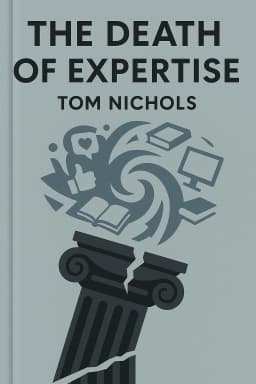
Every day, we are bombarded by headlines, breaking news, and hot takes. But as Tom Nichols argues in The Death of Expertise, the media’s relentless pursuit of attention has come at a cost: the erosion of public trust in experts and institutions.
Journalism is supposed to inform, but in the race for clicks and ratings, it often entertains instead. Sensationalism crowds out substance. Complex issues are reduced to soundbites. The result? A public that is both overwhelmed and underinformed.
This environment breeds low-information voters—people who hold strong opinions but lack basic knowledge of the issues. Fake news spreads like wildfire, and policy debates become more about personality than principle. Nichols warns that when expertise is devalued, democracy suffers. Informed citizenship is not a luxury; it is a necessity.
To counter these trends, readers must become active participants in the news process. Seek out reputable sources, question easy answers, and look for context, not just headlines. The health of democracy depends on it.
References: The Death of Expertise by Tom Nichols, The Conversation, Inside Higher Ed.
Want to explore more insights from this book?
Read the full book summary