
Why Everyone Thinks They’re an Expert: The Hidden Dangers of Ignoring Real Knowledge
How Our Confidence in Ignorance Is Undermining Democracy and Progress

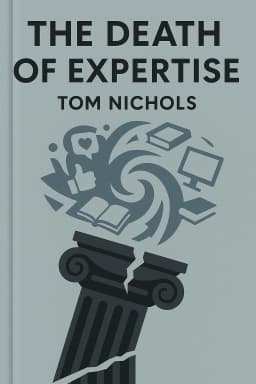
Imagine a world where every voice is equal, every opinion counts, and no one is ever 'talked down to.' Sounds like a utopia, right? But beneath this democratic ideal lies a growing crisis: the systematic devaluation of expertise. In Tom Nichols’ provocative book, The Death of Expertise, he warns that our culture’s pride in not knowing—our willingness to treat gut feelings as equal to decades of study—is undermining everything from science to democracy itself.
It’s not just that people are uninformed; it’s that they’re proud of it. Social media platforms, once hailed as tools for democratizing knowledge, have become echo chambers where facts are optional and opinions are weaponized. The result? A society where the loudest voice often drowns out the most informed.
Take, for example, the rise of anti-vaccine movements or the viral spread of conspiracy theories. These aren’t just fringe beliefs—they’re symptoms of a deeper malaise, one fueled by the Dunning-Kruger effect, where those who know the least are the most confident in their opinions. Nichols argues that this isn’t just frustrating for experts; it’s dangerous. When everyone’s an expert, no one is, and critical decisions about health, policy, and the environment are made on shaky ground.
But how did we get here? Nichols traces the roots of this crisis to several sources: the commodification of higher education, the rise of infotainment in journalism, and the illusion of knowledge created by the Internet. College degrees, once rare markers of achievement, are now treated like consumer products—students as customers, grades as entitlements. Meanwhile, the media’s race for ratings has blurred the line between news and entertainment, favoring sensationalism over substance.
Perhaps most insidious is the role of the Internet. With a few clicks, anyone can access a world of information—or misinformation. Google searches give the illusion of expertise, but without context or critical thinking, this 'knowledge' is often superficial. As Nichols notes, the Internet empowers us, but also misleads us, making us confident in our ignorance.
What’s the solution? Nichols doesn’t call for blind deference to authority. Instead, he advocates for a renewal of humility and curiosity—values that allow us to recognize the limits of our knowledge and seek out those who know more. He calls on experts to listen, communicate clearly, and admit uncertainty. And he challenges all of us to value learning for its own sake, not just as a means to an end.
In the end, the death of expertise is a self-inflicted wound, but it’s not irreversible. By reclaiming respect for knowledge, nurturing curiosity, and fostering civil discourse, we can heal the rift and build a society that values both wisdom and wonder.
References: The Death of Expertise by Tom Nichols, scholarly reviews, and psychological research on cognitive bias.
Want to explore more insights from this book?
Read the full book summary