
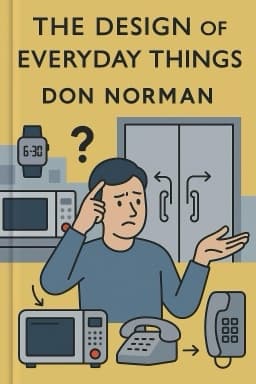
Are You Smarter Than a Door? The Secrets of Intuitive Design Revealed
How the best designs make the right action obvious—and why most products still get it wrong.

It sounds like a joke: 'Are you smarter than a door?' But if you’ve ever hesitated in front of a push/pull door, you know the punchline. The real secret? Good design makes the right action obvious—no instructions needed.
Don Norman’s The Design of Everyday Things popularized the idea of affordances: features that suggest how to use an object. A handle invites pulling; a flat plate suggests pushing. Constraints—like a memory card that fits only one way—limit possible actions, making errors almost impossible.
But why do so many products ignore these rules? Sometimes it’s aesthetics—a designer wants a sleek look, so they hide handles or labels. Sometimes it’s complexity—too many features crammed into too little space. The result: confusion, hesitation, and mistakes.
Feedback—like a click, beep, or light—closes the loop, letting you know you’ve done the right thing. Mapping—the logical relationship between controls and effects—makes complex systems approachable. Think of car seat controls shaped like the seat, or stove knobs arranged like burners.
Spotting these clues in the wild can change how you see the world. Next time you use a product that just works, pause and appreciate its designer. And next time you’re baffled by an object, remember: the smartest users are the ones who demand smarter design.
Intuitive design isn’t magic—it’s empathy and attention to detail. And once you know the secrets, you’ll never look at a door (or a gadget) the same way again.
Want to explore more insights from this book?
Read the full book summary