
Unlocking the Secrets of Your Genes: How Epigenetics is Changing Everything You Thought About DNA
Discover the revolutionary science that shows your DNA isn’t your destiny — and how your lifestyle and environment can rewrite your genetic story.

For decades, the prevailing belief in biology was that our DNA sequence was the unchangeable blueprint that determined our traits, health, and destiny. But the revolutionary science of epigenetics has shattered this notion, revealing a dynamic layer of regulation that controls how genes are read and expressed without altering the underlying code. Imagine your DNA as a script, but with annotations, highlights, and edits that change the performance dramatically — this is the essence of epigenetics.
Early experiments with toad eggs demonstrated that adult cells retain the entire genetic blueprint, overturning the idea that cells lose genes as they specialize. This discovery paved the way for understanding cellular plasticity and the epigenetic landscape metaphor, where cell fate decisions are visualized as a ball rolling down valleys representing stable developmental states.
Fast forward, scientists found that introducing just four genes — Oct4, Sox2, Klf4, and c-Myc — can reprogram adult cells back into pluripotent stem cells, capable of becoming any cell type. This breakthrough holds enormous promise for regenerative medicine, enabling the potential to generate patient-specific cells for therapy.
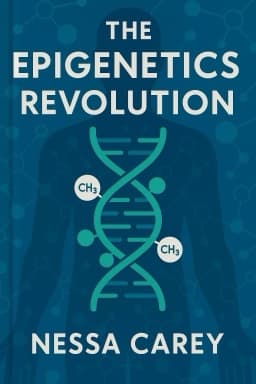
At the molecular level, DNA is wrapped around histone proteins and decorated with chemical marks like methyl and acetyl groups. These epigenetic modifications act as molecular artists, painting the genome to regulate gene expression precisely. DNA methylation generally silences genes, while histone modifications can either activate or repress them, allowing cells to maintain identity and respond to environmental cues.
Identical twins, despite sharing the same DNA, develop different epigenetic profiles over time due to lifestyle and environment. This divergence explains why twins may have different health outcomes, including susceptibility to diseases like schizophrenia.
Remarkably, some epigenetic changes induced by environmental factors such as famine or toxin exposure can be passed across generations, influencing descendants’ health and development. Genomic imprinting exemplifies how parent-specific epigenetic marks are maintained through fertilization.
In disease, epigenetic dysregulation plays a critical role. Cancer cells often silence tumor suppressor genes through DNA methylation and histone modifications, locking cells into malignant states. Epigenetic drugs that reverse these marks offer new hope for treatment. Similarly, epigenetic changes influence neuropsychiatric disorders, linking early life experiences to lifelong outcomes.
Ageing is closely tied to epigenetic drift — the gradual loss of epigenetic stability — contributing to cellular decline and disease. Enzymes like sirtuins connect metabolism and chromatin regulation, influencing longevity and offering targets for anti-ageing therapies.
Beyond humans, epigenetics governs development and behavior in plants and social insects. In honeybees, diet-driven epigenetic changes determine whether a larva becomes a queen or worker. Plants use epigenetic mechanisms to regulate flowering time and adapt to seasonal changes, demonstrating the evolutionary breadth of this phenomenon.
Epigenetics is rewriting biology, showing us that genes are not our fate but part of a complex dialogue with environment and experience. This knowledge opens paths to personalized medicine, regenerative therapies, and a deeper appreciation of life’s complexity.
For more detailed insights and the latest research, explore peer-reviewed journals and comprehensive reviews on epigenetics and its applications in health and disease [[0]](#__0), [[1]](#__1), [[2]](#__2).
Want to explore more insights from this book?
Read the full book summary