
The Hidden Strategies of Dating: How Evolution Shapes Our Modern Love Lives
From Stone Age Survival to Swiping Right

From Stone Age Survival to Swiping Right
Dating in the 21st century can feel like a minefield—so many choices, so much uncertainty, and so many mixed signals. But beneath the surface chaos, there’s a hidden order: the strategies our ancestors evolved to survive and reproduce are still at work every time we flirt, swipe, or fall in love.
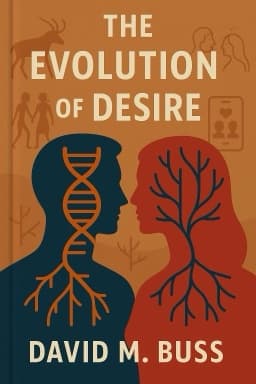
Evolutionary psychology, as championed by David M. Buss, teaches us that both men and women are strategic maters. Depending on the context—like the local sex ratio, personal resources, or even the time of year—we may pursue short-term excitement or long-term stability. This flexibility is an ancient adaptation, allowing us to maximize our chances in a changing world.
Jealousy, often seen as negative, actually serves to protect our relationships from rivals. Mate poaching—starting a relationship with someone already attached—is surprisingly common, and can be understood as a competitive strategy. Even breakups, painful as they are, can be adaptive when a relationship no longer serves our needs.
Technology has changed the game but not the rules. Dating apps give us more options than ever, but too many choices can lead to decision fatigue. The sex ratio in your city shapes who has more power in the dating market, and ancient instincts for variety or status can clash with modern ideals of equality and commitment.
The good news? By understanding these strategies, you can date smarter. Recognize when you’re falling into old patterns, learn to communicate your needs, and don’t be afraid to walk away from relationships that don’t fit. Evolutionary psychology isn’t about blaming biology—it’s about using knowledge to make better choices and build more authentic connections.
References: David M. Buss, "The Evolution of Desire"; Power Dynamics, SoBrief, Medium 2 3 4
Want to explore more insights from this book?
Read the full book summary