Let me take you on a journey that begins not in the present, but in the distant echoes of our evolutionary past. Imagine yourself walking alongside your ancestors, feeling the pulse of a world where survival was uncertain, and every choice mattered. Here, the roots of our deepest desires were laid down, not by chance, but by the relentless force of evolution.
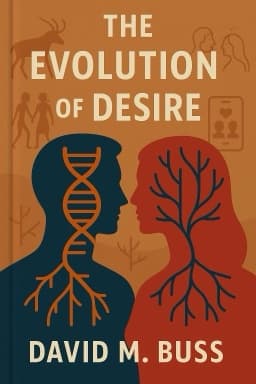
In this ancient dance, every living human is the product of an unbroken chain of successful matings stretching back millions of years. If even one ancestor had stumbled in the complex game of attraction and partnership, we would not be here to ponder these mysteries. Sexual selection—the process by which traits evolve not just for survival, but for reproductive success—has shaped not only the peacock’s brilliant tail but the very architecture of our minds and hearts.
Sexual selection operates in two profound ways. First, there is intrasexual competition: members of the same sex vying for access to mates, like stags locking antlers or rivals whispering about each other in a crowded room. Second, there is intersexual choice: the power to choose, to say yes or no, to favor certain traits—be it kindness, strength, or beauty—over others. These forces are not relics of the past; they live on in every glance, every conversation, every hope for love.
But how do we know this? Decades of scientific exploration have brought clarity. In one of the largest studies ever, over 10,000 people from 37 cultures were asked what they sought in a mate. The answers, though colored by culture, revealed deep universals: women valued resource potential, men prized physical attractiveness, and both sought kindness, intelligence, and emotional stability. Our desires, it seems, are not random—they are the echoes of ancient solutions to the problems of survival and reproduction.
Evolutionary psychology, a field still young but powerful, offers a lens to see love not as a mysterious force, but as a set of adaptations—mental tools shaped to help us solve the challenges of finding, attracting, and keeping a mate. Many of these adaptations operate below our awareness, guiding us with subtle signals and feelings.
Consider for a moment the peacock, whose dazzling feathers make him vulnerable yet irresistible. Or the human courtship rituals, from gifts to poetry to the nervous excitement of a first date. These are not accidents—they are the strategies that have helped our ancestors succeed where others failed.
As we step from the ancient world into the complexities of modern life, remember: the heart’s longings are both timeless and timely, shaped by the same forces that once governed the savanna, now playing out in the digital age. In the next section, we’ll explore how these evolutionary roots blossom into the unique desires of women, and why the question “What do women want?” has fascinated and perplexed for centuries.
Let’s turn the page and discover the intricate tapestry of female choice.