
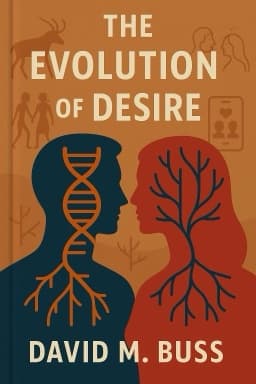
Why We Love Who We Love: The Evolutionary Secrets Behind Attraction (And How to Use Them!)
Unlocking the Ancient Code of Human Desire

Unlocking the Ancient Code of Human Desire
Have you ever wondered why you’re drawn to certain people—why a smile, a voice, or a glance can set your heart racing? The answer lies not just in your personal history, but in the deep, ancient currents of evolution that have shaped human desire for millions of years. David M. Buss, a pioneer in evolutionary psychology, reveals that our preferences are not random whims—they are the product of sexual selection, fine-tuned to maximize our ancestors’ chances of survival and reproduction.
Across cultures, women tend to value ambition, resource potential, and emotional stability, while men are drawn to youth, health, and beauty. Why? Because these traits signaled the best odds for successful offspring in our ancestral past. Even today, studies with over 10,000 participants across 37 cultures confirm these patterns, showing that our hearts still beat to ancient rhythms.
But this isn’t just academic theory. Understanding these drives can transform your love life. For example, knowing that both sexes can pursue short- or long-term strategies (depending on context) helps explain why modern dating can feel so unpredictable. Recognizing the role of jealousy, mate poaching, and even breakups as adaptive strategies can foster empathy and self-awareness in your own relationships.
Technology has added new twists. Dating apps offer endless choices, but too many options can lead to decision paralysis. The sex ratio in your city can shift the balance of power, making one gender’s preferences more dominant. And ancient cravings—like the desire for variety—can clash with the realities of modern commitment.
The key takeaway? We are not prisoners of our biology. By understanding the evolutionary roots of attraction, we can make conscious choices, communicate better, and build relationships that honor both our past and our dreams for the future. Whether you’re single, dating, or in a long-term partnership, evolutionary psychology offers a roadmap for navigating the complexities of love with wisdom and hope.
So next time your heart skips a beat, remember: you’re not just falling in love—you’re dancing to a tune millions of years in the making.
References: David M. Buss,
Want to explore more insights from this book?
Read the full book summary