
From Chaos to Clarity: How Quantitative Risk Management Saves Billions
Discover how leading organizations use numbers to manage risk and optimize investments.

The Cost of Ineffective Risk Management
Poor risk management costs organizations billions through unexpected losses, regulatory fines, and missed opportunities. Traditional qualitative methods fail to provide the precision needed to allocate resources effectively.
Defining Risk Tolerance with Loss Exceedance Curves
Loss exceedance curves, generated by Monte Carlo simulations, show the probability that losses will exceed certain amounts. Organizations use these curves to define acceptable risk levels and make informed decisions about risk exposure.
Calculating Return on Mitigation Investment
By estimating expected loss reductions from controls relative to their cost, organizations calculate the return on mitigation investment. This quantitative approach ensures that mitigation efforts deliver maximum value.
Real-World Success Stories
Leading companies have implemented these methods to optimize cybersecurity budgets, improve supply chain resilience, and reduce operational risks, resulting in significant cost savings and enhanced confidence.
Conclusion: The Business Case for Quantitative Risk
Quantitative risk management is not just a technical exercise; it is a strategic imperative. Organizations that adopt these methods gain clarity, control, and competitive advantage in an uncertain world.
References:
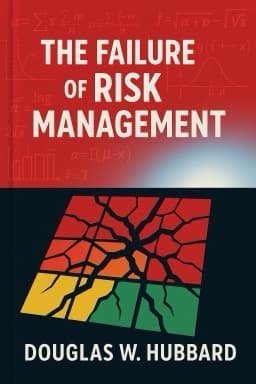
- Douglas Hubbard, The Failure of Risk Management
- Fair Institute Blog on Risk Economics source
Want to explore more insights from this book?
Read the full book summary