
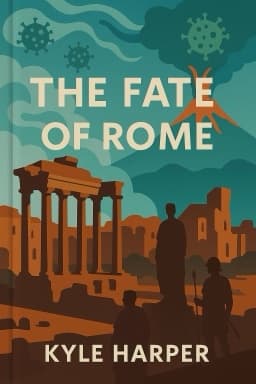
Pandemics, Plagues, and the Fall of Empires: The Untold Story of Rome
How Deadly Diseases Changed the Course of History—And What We Can Learn

How Deadly Diseases Changed the Course of History—And What We Can Learn
When we think of the fall of Rome, we imagine invading barbarians, corrupt emperors, and crumbling marble. But what if the real destroyer was invisible? In The Fate of Rome, Kyle Harper tells a story where pandemics—unseen and relentless—repeatedly upended the Roman world, changing its destiny forever.
The Antonine Plague of the 2nd century AD, likely smallpox, swept through the empire’s heart, killing as many as 10 million people. The Plague of Cyprian followed, bringing a second wave of death and fear. But it was the Justinianic Plague, caused by Yersinia pestis—the same bacterium behind the Black Death—that returned in the 6th century, ravaging cities, emptying villages, and haunting the empire for generations. Modern scientists, armed with the tools of genetic analysis, have confirmed the presence of these pathogens in ancient remains, turning history into a detective story written in DNA.
The effects went far beyond the body count. Labor shortages drove up wages, but fields lay fallow and trade routes faltered. Religious communities grew in importance, offering hope and organizing care. Social rituals changed, with mass graves replacing traditional burials and new forms of charity emerging. The empire’s political and military strength was sapped, and the social contract that held Rome together began to unravel.
The story of Rome’s plagues is not unique. Across history, pandemics have ended eras, toppled empires, and sparked innovation—from the Black Death in medieval Europe to the influenza pandemic of 1918. Today, as we face our own global health crises, the lessons of Rome are urgent: invest in science, build resilient communities, and never underestimate the power of microbes to change the world.
Harper’s book is a gripping reminder that history is shaped not just by kings and wars, but by the tiniest of adversaries. In the end, the fate of Rome was decided as much by bacteria and viruses as by swords and politics—a lesson we would do well to remember.
Further Reading: For more on the science of ancient pandemics and the fate of empires, see the Princeton University Press overview, TechRatchet’s summary, and recent interviews with Kyle Harper.
2
3
1
Want to explore more insights from this book?
Read the full book summary