
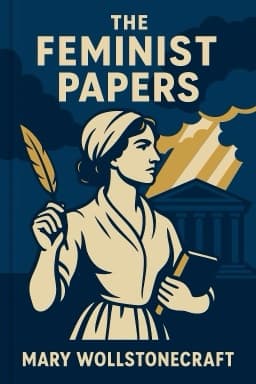
The Shocking Truth About Gender Double Standards—Exposed by Mary Wollstonecraft
How Wollstonecraft Took on the Biggest Names in Philosophy and Won

When Mary Wollstonecraft picked up her pen, she did more than write—she waged war on hypocrisy. In the late 18th century, male philosophers filled libraries with treatises on liberty and reason, but when it came to women, their arguments faltered. Wollstonecraft’s ‘A Vindication of the Rights of Woman’ exposed these contradictions with razor-sharp clarity.
Her most famous target was Jean-Jacques Rousseau, who claimed women were naturally suited for obedience and dependence. Wollstonecraft dismantled his logic, pointing out that the virtues and freedoms he demanded for men were denied to women on the flimsiest of pretexts. She showed that these double standards were not rooted in nature, but in social and educational deprivation.
Wollstonecraft’s critiques went beyond individual philosophers; she challenged the very foundations of society—marriage, religion, and law—that kept women subordinate. Her insistence on universal standards of virtue and reason set a new benchmark for public debate and intellectual integrity.
Her courage to speak truth to power inspired generations of feminists and reformers. Today, her work is a touchstone for anyone fighting double standards and demanding justice. Wollstonecraft’s story reminds us that the battle for equality begins with the courage to challenge received wisdom—and the willingness to debate with respect and conviction.
Sources: Britannica, Arapahoe Libraries, EditVerse
Want to explore more insights from this book?
Read the full book summary