
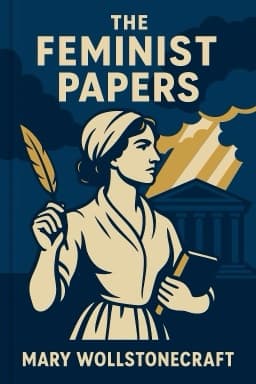
Why Mary Wollstonecraft’s Ideas Still Set the World on Fire
The Revolutionary Feminist Manifesto That Continues to Shape Modern Equality

Imagine a world where the most radical idea is that women are human beings—fully rational, equally deserving, and capable of shaping their own destinies. This was the world Mary Wollstonecraft confronted in 1792, and with her pen, she lit a fire that still burns today. ‘A Vindication of the Rights of Woman’ is not just a cornerstone of feminist philosophy; it is a manifesto that continues to challenge, provoke, and inspire.
Wollstonecraft’s arguments were revolutionary. She declared that virtue and reason know no gender, and that society’s insistence on female obedience and delicacy was a form of intellectual imprisonment. She wrote, ‘I do not wish them [women] to have power over men; but over themselves,’ demanding not dominance but dignity and self-mastery. Her critique of the education system was especially scathing: girls were taught to be pretty, not wise; compliant, not curious. Wollstonecraft envisioned schools where boys and girls learned side by side, forging respect and equality from childhood.
Her fearless engagement with Enlightenment thinkers—especially her pointed rebuttal of Rousseau’s views on women—set a new standard for intellectual debate. She exposed the double standards of men who championed liberty for themselves but denied it to women, and she called for a society where marriage, religion, and politics were built on respect and partnership. Her vision extended beyond individual rights to the transformation of families, communities, and nations.
Wollstonecraft’s legacy is visible in every stride toward equality since her time. Suffragists, educators, and activists have drawn inspiration from her work. Her daughter, Mary Shelley, became a literary icon in her own right, and today, Wollstonecraft’s arguments are cited in debates on gender, education, and autonomy. Her story is one of resilience, hope, and the courage to speak truth to power. As we continue to fight for equality, her words remind us: ‘The beginning is always today.’
Let us carry her torch, question the status quo, and build a future where every person’s potential is honored and nurtured. Mary Wollstonecraft’s fire is ours to keep burning.
Sources: Britannica, EditVerse, Arapahoe Libraries
Want to explore more insights from this book?
Read the full book summary