
America’s Destiny in Cycles: What History’s Rhythms Tell Us About the Future
Explore how America’s past crises and awakenings form a blueprint for its future, and what this means for every citizen.

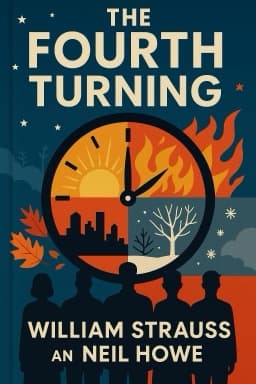
American history is often seen as a story of progress and innovation, but beneath the surface lies a deeper rhythm—one of recurring cycles of crisis and renewal. According to the theory popularized by William Strauss and Neil Howe, these cycles follow a predictable pattern tied to generational lifespans.
The nation has faced three major Fourth Turning crises so far: the Revolutionary War, the Civil War, and the Great Depression combined with World War II. Each crisis was a defining moment that reshaped America’s institutions and identity. Between these crises, periods of Awakening—such as the spiritual and cultural revolutions of the 1960s—challenged existing norms and prepared the country for the next upheaval.
These patterns are not mere coincidences but reflect the natural ebb and flow of societal moods and generational dynamics. The timing of these cycles suggests that America is either in or approaching another Fourth Turning, a crisis that will demand collective sacrifice and visionary leadership.
For citizens, this means the future holds both risks and opportunities. Understanding these cycles encourages preparation, fostering community resilience, and embracing the roles individuals and generations play in shaping history.
By learning from the past, Americans can navigate the coming challenges with wisdom and hope, ensuring that the next chapter in the nation’s story is one of renewal and strength.
Based on Strauss & Howe’s framework and supported by historical research and contemporary analysis. [[0]](#__0) [[2]](#__2) [[3]](#__3)
Want to explore more insights from this book?
Read the full book summary