
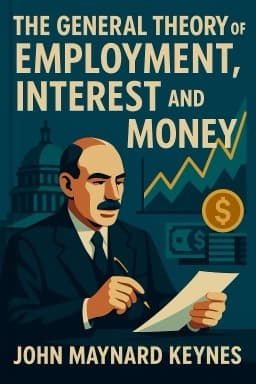
Unlocking the Secrets of Keynesian Economics: How One Theory Changed the World Forever
Discover the revolutionary ideas that reshaped economic thought and continue to influence global policies today.

Imagine a world plunged into economic despair, where millions were unemployed, markets were failing, and the old economic rules no longer made sense. This was the reality during the Great Depression of the 1930s, a time when classical economic theories that preached self-correcting markets were proven tragically inadequate. It was in this crucible of crisis that a revolutionary thinker emerged, offering a new lens to understand and heal economic turmoil.
John Maynard Keynes, with his unique blend of academic brilliance and practical government experience, challenged the prevailing orthodoxy. He argued that the total demand for goods and services—aggregate demand—was the true driver of employment and economic health, not just wages or supply-side factors. This insight shifted the focus from the invisible hand of markets to the tangible role of government in managing economic cycles.
Aggregate Demand and Employment
Keynes introduced the concept that employment levels depend on the overall spending in the economy. When demand falls, businesses cut back production and lay off workers, creating a vicious cycle of unemployment and reduced spending. This was a radical departure from the belief that labor markets would always clear through wage adjustments.
Consumption, Savings, and Investment
Further refining his theory, Keynes explored how people’s spending habits influence demand. He identified the marginal propensity to consume—the tendency to spend only part of any additional income—which affects how quickly economies can recover. Moreover, he highlighted complexities in the relationship between savings and investment, showing that savings do not automatically lead to productive investments, especially during uncertain times.
Government Intervention: Fiscal and Monetary Policy
Perhaps most groundbreaking was Keynes’s advocacy for active government intervention. He argued that during recessions, governments should step in with fiscal stimulus—public spending and tax cuts—to boost demand and create jobs. While monetary policy, such as adjusting interest rates, plays a role, Keynes recognized its limits, particularly in liquidity traps where low rates fail to spur spending.
Legacy and Modern Relevance
Keynesian economics dominated postwar policy, shaping decades of economic management. Though debated and adapted over time, its core principles regained prominence during the 2007–8 financial crisis, as governments worldwide deployed stimulus measures to counteract economic collapse. Today, Keynes’s ideas continue to inspire diverse schools of thought and remain central to understanding economic policy.
This journey through Keynesian economics reveals not only a theory but a transformative way of seeing the economy—as a dynamic system where human behavior, government action, and market forces intertwine. It reminds us that economic stability and prosperity require thoughtful stewardship, especially in times of crisis. As we explore further, we will uncover the nuanced mechanisms behind these ideas and their profound implications for our world.
Want to explore more insights from this book?
Read the full book summary