
Why Violence is the Hidden Force Shaping Inequality: The Shocking Truth from History
Discover how war, revolution, pandemics, and state collapse have repeatedly reshaped the balance of wealth across millennia.

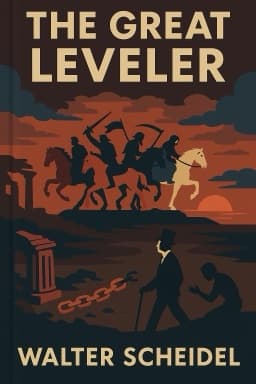
When we think about inequality today, we often imagine it as a product of economic systems, policy choices, or cultural factors. What if the most decisive forces that have actually reduced inequality over thousands of years are far more brutal and disruptive? This is the startling thesis of Walter Scheidel's acclaimed book, The Great Leveler. Through a sweeping historical analysis, Scheidel argues that only four violent shocks—mass mobilization warfare, transformative revolutions, state collapse, and pandemics—have consistently compressed inequality on a large scale.
To understand this, we must first look back at the earliest human societies. Our primate ancestors lived in dominance hierarchies where strength dictated access to resources. Early humans, however, developed unique leveling mechanisms—such as the invention of projectile weapons and social norms enforcing egalitarian sharing—that kept inequality relatively low for tens of thousands of years. These hunter-gatherer groups maintained an egalitarian balance through cooperation and social sanctions rather than force.
But the advent of agriculture marked a turning point. With the domestication of plants and animals, humans began producing surpluses that could be stored, controlled, and inherited. Property rights emerged, enabling the accumulation of wealth and the rise of social hierarchies. In early farming communities and later empires like Han China and Ancient Rome, elites consolidated land, resources, and political power, institutionalizing inequality. Taxation, land grants, and political offices became tools to reinforce elite dominance.
Yet, inequality did not grow unchecked. History shows repeated episodes where violent shocks disrupted the established order. The Four Horsemen—war, revolution, state failure, and pandemics—acted as brutal equalizers. The two World Wars wiped out fortunes and led to the Great Compression, a period of reduced inequality and expanded social welfare. Revolutions redistributed land and dismantled elites, while pandemics like the Black Death raised wages by reducing labor supply. State collapses reset social hierarchies altogether.
These shocks share a common theme: they are devastating and costly, but they have been the only forces powerful enough to significantly reduce inequality at scale. Peaceful reforms, education, and economic growth have had limited success by comparison, often failing to keep pace with the concentration of wealth.
Today, the traditional violent levelers are dormant, and inequality is rising again globally, fueled by globalization, technological change, and political dynamics favoring elites. This raises difficult questions about the future: can peaceful mechanisms ever match the leveling power of history’s brutal shocks? Or will new forms of upheaval emerge?
Understanding the deep, often violent roots of inequality challenges us to rethink our approaches and recognize the complexity of the problem. It also invites reflection on the human cost of leveling and the urgent need for innovative, peaceful pathways toward greater equality.
By exploring these themes, we gain a richer perspective on the forces that have shaped human societies and the enduring challenge of inequality. For anyone interested in history, economics, or social justice, Scheidel’s work is a profound and sobering guide.
References and further reading include reviews and summaries from the London School of Economics, Amazon, and Goodreads, which highlight the book’s contribution to understanding inequality through an interdisciplinary lens. 1 2 3
Want to explore more insights from this book?
Read the full book summary