
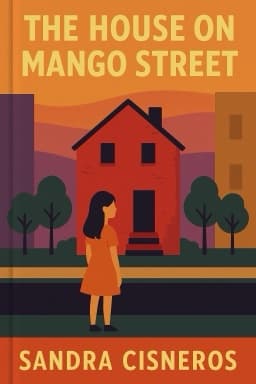
The Poetic Voice of Mango Street: How Language Shapes Story and Identity
Unpacking the unique blend of poetry and prose that gives voice to a community

The House on Mango Street stands out for its innovative narrative style—a seamless fusion of poetry and prose that captures the rhythms of life and memory. This structure invites readers into a world where each vignette is a snapshot, a moment of clarity amidst the flow of experience.
The use of short, lyrical chapters mirrors the way memories surface—fragmented yet vivid. This approach challenges traditional storytelling, creating a mosaic that reflects the complexity of identity and community.
Bilingualism is central to the narrative’s authenticity. The interplay of English and Spanish not only reflects the protagonist’s cultural reality but also asserts the legitimacy of hybrid identities. This code-switching enriches the text with cultural nuances and emotional depth.
Language becomes an act of empowerment. Writing is portrayed as a means of healing and self-definition. The narrator’s declaration, 'I write it down and Mango says goodbye sometimes,' underscores the transformative power of storytelling.
This poetic voice elevates everyday experiences, celebrating the beauty in the mundane and the resilience in struggle. It invites readers to listen closely and embrace the multiplicity of voices that make up the community.
For lovers of literary innovation and cultural narratives, this exploration offers a deep appreciation of how form and language shape meaning.
Sources: SparkNotes Analysis, Salem Press Critical Insights, Study.com Themes [[0]](#__0) [[1]](#__1) [[2]](#__2)
Want to explore more insights from this book?
Read the full book summary