Sandra Cisneros
A poetic coming-of-age story of a young Latina girl navigating identity and dreams in a Chicago neighborhood.
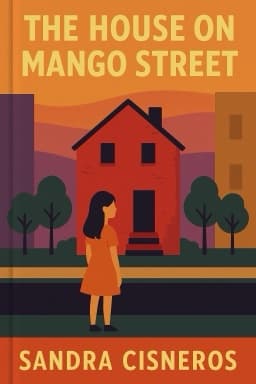
Sandra Cisneros wrote The House on Mango Street while she was a graduate student in Iowa City.
1 more facts available in the app
Section 1
7 Sections
In the quiet corners of a small, crumbling red house, a young girl named Esperanza begins a journey that many of us know well—the journey to understand who she really is.
Esperanza’s struggle with her name reveals a deeper conflict—how to claim one's identity in a world that often misunderstands or marginalizes you. At school, her name is mangled and laughed at, making her feel like an outsider. Yet, this feeling of otherness is not just a source of pain but also the spark of her awakening.
She recalls the moment when a nun pointed at her third-floor flat and said 'There,' as if that place was less than worthy. It was then that Esperanza understood what it meant to be invisible and to long for a home she could truly call her own.
This yearning is a universal one, the desire to belong yet to transcend, to be seen and to be free. Esperanza’s voice, born from the humble and often harsh realities of her neighborhood, is rebellious and poetic. It challenges the norms of academic literature by embracing the language of her community, the slang, the rhythms, and the stories of those who live in the margins.
Her story teaches us that naming is an act of power, that recognizing our otherness can lead us to claim our place in the world.
Let us move now to explore the neighborhood that holds these stories and the people who live within its tight spaces.
What does Esperanza’s name symbolize in the story?
13 more quizzes available in app
Names hold deep cultural meaning and influence personal identity.
7 more insights available in app
Unlock all 7 sections, 8 insights, full audio, and interactive mind map in the SnapBooks app.
How a young girl’s name and neighborhood reveal the profound struggle for self-definition
Read articleDiscover how place and people shape the lives and dreams of a community in Sandra Cisneros’ masterpiece
Read article