
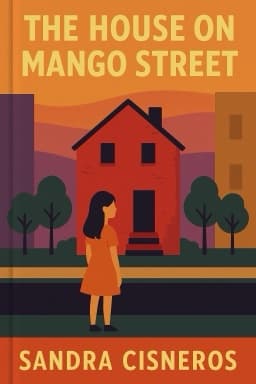
The Silent Wars of Growing Up: Gender and Resistance on Mango Street
How a young girl’s quiet rebellion challenges traditional gender norms in a restrictive community

In the vibrant world of Mango Street, the boundaries between boys and girls are sharply drawn, creating separate social spheres with distinct rules. The House on Mango Street poignantly captures the challenges faced by young girls navigating these gendered spaces.
Boys roam freely, their laughter echoing through the streets, while girls are often confined by expectations to behave 'tame' and modest. The protagonist, Esperanza, observes these divisions with a keen eye, longing for freedom and friendship beyond these invisible walls.
Her 'quiet war'—a series of small acts of rebellion such as refusing to clear the table or dreaming of independence—symbolizes a deeper desire to challenge and redefine traditional gender roles. These acts are not loud protests but intimate assertions of autonomy and identity.
The stories of Sally and Minerva reveal the harsh realities behind the façade of childhood innocence—early marriages, domestic abuse, and the struggle to escape oppressive circumstances. These narratives underscore the resilience of young women determined to claim their own futures.
This section of the novel highlights the tension between societal expectations and personal dreams. It invites readers to reflect on the ongoing challenges of gender inequality and the power of subtle resistance.
For readers interested in gender studies and coming-of-age stories, this exploration offers a nuanced understanding of how identity is shaped within cultural constraints and the courage it takes to resist.
Sources: SparkNotes Analysis, Salem Press Critical Insights, Study.com Themes [[0]](#__0) [[1]](#__1) [[2]](#__2)
Want to explore more insights from this book?
Read the full book summary