
Why ‘Winning’ is Killing Your Business: The Infinite Game Mindset Shift You Need Now
Discover how embracing an infinite mindset can transform your leadership and ensure your organization’s survival and growth in a rapidly changing world.

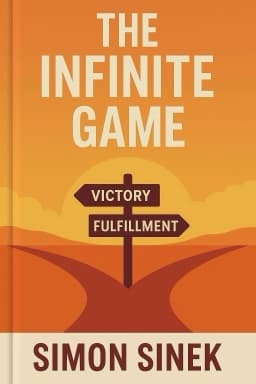
In today’s hyper-competitive world, the obsession with winning—whether it’s beating the competition, hitting quarterly targets, or claiming market dominance—has become a pervasive leadership trap. But what if the very idea of winning is limiting your organization’s potential? Simon Sinek’s groundbreaking book, The Infinite Game, offers a profound shift in perspective: the best leaders play not to win a finite game but to keep playing an infinite one.
At its core, the infinite game is about enduring purpose and continuous play. Unlike finite games like football or chess, which have fixed rules, known players, and clear winners, infinite games have changing players, flexible rules, and no defined endpoint. Businesses, relationships, and even life itself fall into this category.
One of the most powerful drivers in the infinite game is the concept of a Just Cause—a future vision so compelling that people are willing to sacrifice and commit to it over the long haul. This cause must be affirmative, inclusive, service-oriented, resilient, and idealistic. It’s not about beating competitors but about advancing a cause bigger than oneself. For example, a company that aims to inspire healthier communities by connecting people to real food invites employees, customers, and partners into a shared journey that transcends profits.
But a Just Cause alone isn’t enough. The infinite game demands Trusting Teams where psychological safety allows members to be vulnerable, admit mistakes, and innovate without fear. Research shows such teams have fewer accidents and higher creativity. Vulnerability, often mistaken for weakness, is actually the foundation of strength and resilience.
However, even the best intentions can falter when Ethical Fading sets in. This unconscious drift from values, often triggered by pressure to meet short-term goals, leads to rationalizing unethical behavior. It is crucial for leaders to guard their moral compass vigilantly, aligning incentives with long-term integrity rather than short-term wins.
Competition also takes on a new meaning in the infinite game. Instead of enemies to defeat, we have Worthy Rivals—those who expose our weaknesses and push us to improve. This mindset fosters humility and continuous growth rather than destructive rivalry.
To sustain this journey, leaders must embrace Existential Flexibility—the courage to make profound strategic pivots when necessary, even at great risk. History teaches us that organizations that cling rigidly to old models risk obsolescence, while those willing to adapt boldly thrive.
Finally, the infinite game demands the Courage to Lead—prioritizing long-term purpose over short-term gains, even when it’s difficult or unpopular. This bravery builds cultures of trust, inspiration, and resilience, ensuring the organization’s legacy beyond any single victory.
In conclusion, playing the infinite game is a lifelong journey of purpose, trust, adaptability, and courage. It challenges us to look beyond the scoreboard and embrace leadership as a continuous, inspiring quest.
For leaders ready to transform their approach, the infinite game offers a roadmap to lasting success and fulfillment.
References: Insights drawn from Simon Sinek’s The Infinite Game and related leadership research.
1
,
2
,
4
Want to explore more insights from this book?
Read the full book summary