
Why Fear is the Secret Ingredient to Your Greatest Success
Unveiling the Hidden Power of Fear to Spark Growth and Opportunity

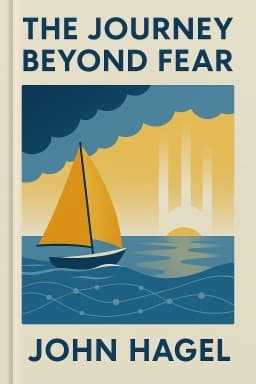
Fear is a universal emotion, yet it is rarely given the credit it deserves as a driver of growth and transformation. In the modern world, we are surrounded by opportunity—unprecedented technological advances, global connectivity, and access to knowledge. Yet, alongside these opportunities, there is a rising tide of pressure: competition, economic uncertainty, and the relentless pace of change. This paradox is at the heart of John Hagel's 'The Journey Beyond Fear,' a book that challenges us to see fear not as the enemy, but as the starting point of our greatest journey.
Hagel argues that fear is not just an individual experience—it is a networked phenomenon. In organizations, fear can spread rapidly, shaping cultures and driving collective behavior. When left unexamined, fear leads to risk aversion, isolation, and a narrowing of vision. But when we acknowledge its presence and seek to understand its roots, fear becomes a map, highlighting where our greatest opportunities for learning and growth lie. The book is filled with examples—executives who, gripped by fear of failure, stifle innovation, and communities that, when united by a shared narrative, turn fear into collective action and resilience.
One of the most powerful tools for moving beyond fear is the narrative. While stories comfort us with their tidy endings, narratives are open-ended, unresolved, and participatory. They invite us to step into the unknown, to co-create the future. Hagel distinguishes between threat-based narratives, which focus on what we must avoid, and opportunity-based narratives, which pull us toward a future worth striving for. The latter are the foundation of hope, trust, and collaboration.
On a personal level, the book encourages readers to examine their own narratives. Are you motivated by a desire to avoid loss, or by the excitement of pursuing something meaningful? The shift from a threat-based to an opportunity-based narrative is transformative: it changes how we see ourselves, how we relate to others, and how we approach challenges. It is the difference between living in a world of scarcity and stepping into a world of abundance.
Hagel’s insights are not just theoretical. He provides practical strategies for leaders and individuals alike: make your fears explicit, reframe setbacks as learning opportunities, and cultivate environments where curiosity and passion can flourish. The book’s message is clear—fear will always be with us, but it doesn’t have to define us. In fact, it can become the very thing that propels us forward, if we learn to listen and respond with courage and imagination.
As you reflect on your own journey, consider the role of fear in your life. What is it trying to teach you? What opportunities lie hidden on the other side of your anxiety? The path beyond fear is not easy, but it is the only path that leads to real growth, connection, and fulfillment. Embrace it, and you may discover that your greatest successes are born from your greatest fears.
Want to explore more insights from this book?
Read the full book summary