
Unlocking the Ancient Secrets: How 'The Lost Art of Scripture' Can Transform Your Spiritual Journey
Discover the profound wisdom hidden in ancient sacred texts and why modern readers need to reclaim the living art of scripture.

Introduction: More Than Words on a Page
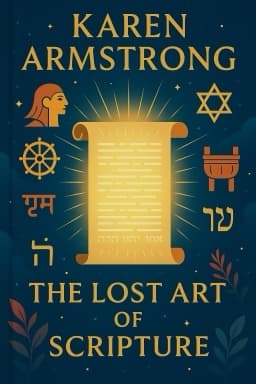
In today's fast-paced digital era, sacred texts often get reduced to mere words on a page or ideological battlegrounds. Yet, 'The Lost Art of Scripture' reveals a deeper reality: scripture was originally a living art form — an embodied practice combining story, ritual, and sound to connect humans with the divine and one another. This journey begins not with printed books but with the awe-inspiring Lion Man figurine from 40,000 years ago, a symbol of early humans' capacity to imagine and embody transcendence.
Neuroscience helps explain why sacred experience is holistic, engaging the brain's right hemisphere to perceive interconnectedness, metaphor, and empathy. This explains why early rituals emphasized chanting, precise sound, and communal enactment over written words. The Vedic tradition of India preserved sacred hymns orally for centuries, believing the power lies in the sound itself, not just meaning. Mantras became sonic vessels for transformation, awakening spiritual awareness beyond rational thought.
Meanwhile, ancient China integrated ritual as the foundation of social and cosmic order. The Mandate of Heaven linked political legitimacy to moral conduct and ritual propriety, showing how sacred practice was inseparable from ethics and governance. Rituals enacted the harmony between heaven and earth, embedding scripture in lived experience.
In Israel, the trauma of exile transformed oral traditions into written scripture, emphasizing social justice and covenantal loyalty. Prophets like Amos called for justice to 'roll down like waters,' critiquing empty ritual and demanding ethical action. Scripture became a tool of collective memory and identity, inspiring resilience amid hardship.
The Western turn toward scripture as authoritative text during the Reformation introduced the principle of sola scriptura, emphasizing scripture alone as the source of truth. Yet scripture remained a living art, performed and chanted within ritual contexts, blending faith and reason in dynamic tension.
Ultimately, Armstrong invites us to integrate mythos, logos, and ritual — story, reason, and embodied practice — to reclaim scripture as a transformative art. This includes kenosis, the spiritual emptying of self, which fosters empathy and aligns with holistic brain function. In a fractured world, this living scripture calls us to compassion, justice, and unity.
This profound exploration challenges readers to move beyond passive reading to active engagement, embodying the sacred in daily life. It is a call to rediscover the lost art of scripture as a vital path for personal and societal healing.