
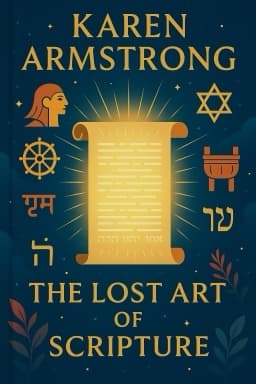
Why Modern Readers Are Missing the Point of Scripture — And How to Rediscover Its Power
Modern society often reduces scripture to dogma or history, but this book reveals how to revive its transformative essence.

The Reduction of Scripture in Modernity
In the contemporary world, scripture often suffers from what can be called 'textual reductionism' — the tendency to treat sacred texts as static documents to be analyzed intellectually or legislated as rigid laws. This approach strips scripture of its performative, ritualistic, and mythic dimensions that once made it a living art.
Historically, sacred scriptures were deeply intertwined with oral traditions and communal rituals. The Vedas, for example, were preserved through precise oral chanting, emphasizing sound’s sacred power. Similarly, Chinese ritual embedded scripture into political and social harmony, while Israelite prophets linked scripture to justice and community identity.
Modernity’s privileging of written text, especially after the invention of the printing press and the Protestant Reformation’s sola scriptura principle, shifted focus toward individual reading and intellectual interpretation. While this democratization had profound benefits, it also detached scripture from the embodied rituals and communal contexts that gave it vitality.
Moreover, the rise of scientific rationalism has sometimes cast doubt on the mythic and poetic aspects of scripture, relegating them to the realm of superstition or metaphor. Yet, as 'The Lost Art of Scripture' shows, myth and ritual are not irrational distractions but essential ways humans access profound existential truths. Neuroscience supports this by demonstrating how different brain hemispheres engage with symbolic and literal modes of understanding.
Reclaiming scripture’s living art involves reintegrating story, sound, ritual, and reason. This means embracing scripture not just as text to be read but as drama to be enacted, chant to be intoned, and myth to be lived. It invites communities to gather, embody sacred narratives, and transform individual and collective consciousness.
In a fractured world marked by ideological polarization and spiritual alienation, rediscovering this lost art holds promise for healing and renewal. It calls us back to a holistic spirituality that honors both mind and heart, tradition and innovation, faith and reason.