
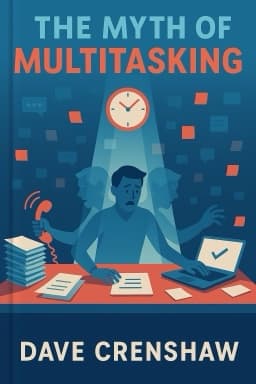
The Hidden Costs of Multitasking: What Your Brain Isn’t Telling You
How Multitasking Sabotages Your Mind, Your Work, and Your Relationships

How Multitasking Sabotages Your Mind, Your Work, and Your Relationships
It’s a common scene: you’re answering emails, chatting on the phone, and reviewing a report—all at once. You might feel like a productivity superstar, but your brain is quietly paying a heavy price. Contrary to popular belief, multitasking is not a superpower—it’s a neurological impossibility for anything that requires real attention. In fact, what we call multitasking is actually switchtasking: the brain’s rapid toggling between tasks, which comes with significant costs.
Research from cognitive neuroscience has shown that the brain has a single 'central processor' for attention. When you try to do two complex things at once, your brain can’t handle both. Instead, it switches back and forth, losing time, making more mistakes, and increasing mental fatigue. Every interruption, even a quick question or a notification ping, can cost you up to five minutes of lost focus. Multiply this by the dozens of interruptions you experience each day, and you’ll see why multitasking is a major productivity drain.
The impact goes beyond lost time. When you divide your attention in meetings, conversations, or family time, people feel it. They notice your distracted gaze, your delayed responses, your lack of presence. Over time, this erodes trust and connection, leading to weaker relationships and less effective teamwork. One study cited in Dave Crenshaw’s book found that multitasking in meetings led to lower team morale and more misunderstandings.
So, what can you do? Start by recognizing the limits of your brain. Accept that true multitasking doesn’t exist for complex tasks. Protect your focus by turning off unnecessary notifications, setting clear communication boundaries, and batching similar tasks together. When you’re with others, give them your full attention—your relationships will thank you.
In the end, the greatest gift you can give yourself and those around you is your undivided attention. By understanding the hidden costs of multitasking and taking steps to minimize them, you’ll unlock a new level of productivity, satisfaction, and connection.
References: The Myth of Multitasking by Dave Crenshaw, Blinkist summary, LeanBlog review, Amazon book reviews, and neuroscience research.
Want to explore more insights from this book?
Read the full book summary