
Why Multitasking Is Destroying Your Productivity (And What To Do About It!)
Unmasking the Multitasking Myth: How Doing Less Gets You More

Unmasking the Multitasking Myth: How Doing Less Gets You More
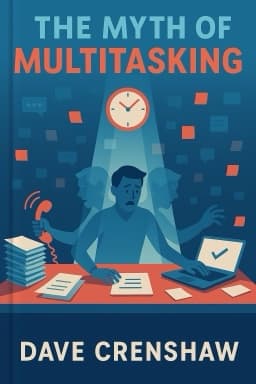
Imagine this: you’re at your desk, juggling emails, phone calls, Slack notifications, and maybe even a quick scroll through social media. You feel busy, maybe even productive. But by the end of the day, your to-do list is longer, your mind is scattered, and your sense of accomplishment is missing. Sound familiar? The truth is, what most of us call 'multitasking' is actually a productivity killer—and science backs this up. In his landmark book, The Myth of Multitasking, Dave Crenshaw exposes the lie we’ve been sold: that doing more at once means getting more done. In reality, multitasking is a myth, and it’s time to reclaim your focus, your time, and your life.
Let’s start with a simple fact: multitasking, as it’s commonly understood, doesn’t exist for human beings. The term originated in computer science, describing how early computers rapidly switched between tasks. But unlike computers, our brains can only focus on one complex task at a time. When we try to juggle, we’re not multitasking—we’re switchtasking, rapidly shifting our attention from one thing to another. Each shift comes with a hidden cost: lost time, increased errors, and mental fatigue. Studies show that the average worker loses up to 28% of their day to interruptions and recovery time. That’s over two hours—every single day—gone to the illusion of productivity.
But the damage isn’t just in lost minutes. Multitasking erodes the quality of your work and your relationships. When you split your focus in meetings, conversations, or even family dinners, people notice. They feel undervalued, ignored, and disconnected. Over time, this damages trust and collaboration, both at work and at home. The solution? Embrace the power of single-tasking. By focusing on one thing at a time, you not only improve the quality of your work, but also deepen your connections with those around you.
The science is clear: our brains are wired for focus, not fragmentation. Neurological studies reveal a single 'central processor' for attention. When we try to do two attention-heavy tasks at once, our brains bottleneck, forcing us to switch back and forth. This is why even simple interruptions—like a colleague asking a question or a phone ping—can cost us several minutes of lost focus. The exception to this rule is background tasking: pairing a mental task with an automatic one, like listening to music while jogging. But for most of our work, true multitasking is impossible.
So how do we reclaim our focus? Start by minimizing interruptions. Turn off notifications, set clear boundaries for communication, and batch your emails and messages into specific times of the day. Consider implementing recurring meetings for regular check-ins, so colleagues know when they can reach you without disrupting your flow. And don’t forget to celebrate small wins—each moment of deep focus is a victory worth acknowledging.
Leaders play a crucial role in shaping workplace culture. When managers model focused work and set up systems that support deep concentration, teams follow suit. Over time, these habits ripple out, transforming organizations from chaotic to calm, from reactive to proactive. Remember, lasting change requires both personal commitment and organizational support.
Finally, make it stick by building habits for life. Track your time, build routines, and share your goals with an accountability partner. Celebrate every step forward, and forgive yourself when you slip. Focus is a practice, not a destination—and every day offers a new chance to begin.
Are you ready to break free from the multitasking myth and embrace a more focused, fulfilling way of working and living? The journey starts now.
References: The Myth of Multitasking by Dave Crenshaw, Blinkist summary, LeanBlog review, and additional productivity research.
Want to explore more insights from this book?
Read the full book summary