
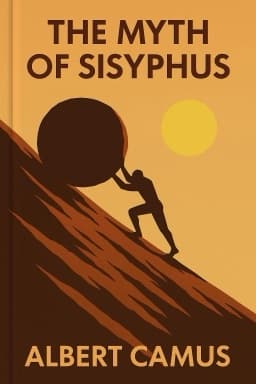
How Camus’s Absurdism Can Help You Thrive in an Uncertain World
Turning the Absurd Into Your Secret Superpower

What if the key to happiness isn’t in finding answers, but in embracing the questions? Albert Camus’s The Myth of Sisyphus offers a bold, counterintuitive approach to dealing with life’s toughest moments. Instead of denying pain or searching for cosmic meaning, Camus suggests we accept the absurdity of existence and turn it into a source of strength.
At its heart, absurdism is about honesty. It’s about seeing the world as it is—messy, unpredictable, sometimes cruel—and refusing to sugarcoat reality. This doesn’t mean giving in to despair. Instead, Camus’s absurd hero chooses to revolt: to live with passion, clarity, and creativity, even when nothing is guaranteed.
Absurdism as a Self-Help Philosophy
In a world rocked by pandemics, political upheaval, and personal loss, Camus’s message is more timely than ever. When routines collapse and future plans seem pointless, the absurd offers a new way forward. It says: you don’t need to justify your existence with grand narratives. You can find meaning in the act of living itself.
Resilience Through Revolt
Camus’s idea of revolt is a daily practice. It’s waking up and choosing to face the world, even when it doesn’t make sense. It’s creating art, building relationships, and savoring small joys—not because they last forever, but because they are real now. The absurd hero isn’t a victim; they are an active participant in life’s drama.
Freedom in Letting Go
Absurd freedom comes from letting go of illusions about the future. When you stop chasing impossible guarantees, you become free to shape your present. This doesn’t mean giving up on goals, but it does mean accepting that life’s value isn’t measured by outcomes. It’s measured by the richness of your experiences and the courage you bring to each day.
Creativity as Defiance
For Camus, creation is an act of rebellion. Whether you paint, write, cook, or simply share a laugh with friends, you are asserting your existence against the void. This creativity isn’t about fame or legacy—it’s about making the most of your moment.
Happiness in the Struggle
Perhaps the most radical part of Camus’s philosophy is the idea that happiness is possible even when the world makes no sense. Like Sisyphus, we can learn to love our fate—not by denying its difficulty, but by embracing the struggle with awareness and pride. This is not resignation, but a celebration of our ability to endure, create, and find joy where we can.
So next time you feel lost or overwhelmed, try a little absurdism. Face the world as it is, revolt against despair, and create something beautiful—even if it’s just a smile. You might be surprised by how much freedom and happiness you discover in the climb.
References: Camus, The Myth of Sisyphus; modern reviews and interpretations
1
2
3
Want to explore more insights from this book?
Read the full book summary