Let us begin this journey with a gentle question, one that sits quietly at the edge of every heart: why live? In the hush of dawn, as the world stirs, some find themselves suddenly awake to a peculiar emptiness—a sense that the rhythm of life, though familiar, has begun to lose its music. This is not a question born of melancholy alone, but of a deeper curiosity: if the world offers no clear answer, what makes life worth living?
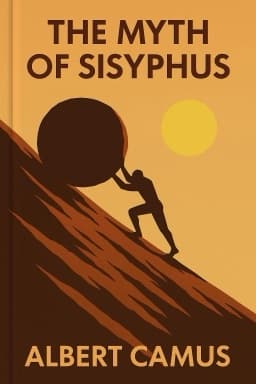
Imagine a manager, quietly changed after the loss of a loved one, or the silent moments when a friend’s indifference tips the balance of an already heavy heart. These are not grand philosophical arguments, but lived realities. Camus reminds us that no one dies for logic, but many have died because life seemed unbearable. The question of suicide, then, is not a clinical one, but a deeply personal reckoning with the absurd—the gap between our craving for clarity and the world’s silent indifference.
Yet, as the sun rises, so does a gentle resistance. Most do not end their lives through reflection, but continue out of habit, out of the body’s stubborn will to go on. The act of questioning, of beginning to think, is itself an act of being undermined, but also an act of awakening. The crisis is rarely a single moment; it is a slow accumulation, like water wearing away stone.
In these pages, we are invited to walk with Camus through the landscapes of the absurd—not as distant theorists, but as fellow travelers. We will see that the question of meaning is not a puzzle to be solved, but a reality to be lived.
And so, with a gentle breath, we move forward—toward the next question: what is this feeling of absurdity, and where does it lead us?