
Why Everyone’s Talking About The Myth of Sisyphus—And Why You Should Too
Unlocking the Power of Absurdism for Modern Living

Albert Camus’s The Myth of Sisyphus is a work that refuses to go out of style. Decades after its publication, this slim volume still sparks heated debates, inspires memes, and shows up on countless reading lists. But what exactly makes this book so magnetic? And why do so many people turn to Camus when life feels overwhelming or meaningless?
The answer starts with the book’s central question: Is life worth living? Camus doesn’t shy away from the darkness. He opens with the bold claim that suicide is the only truly serious philosophical problem. Before we can talk about ethics, politics, or happiness, we must decide if existence itself is justified. It’s a chilling thought, but Camus’s approach is anything but hopeless.
Confronting the Absurd
Camus introduces the concept of the absurd: the clash between our relentless search for meaning and the universe’s indifferent silence. We want answers, but the world offers none. This realization can happen anywhere—a sudden sense of strangeness in the middle of your daily commute, or the moment you realize that all your routines are just that: routines. Camus argues this is not a crisis to be solved, but a reality to be embraced.
Rejecting Escape: The Temptation of Philosophical Suicide
Many thinkers, faced with the absurd, leap into faith or invent comforting philosophies. Camus calls this “philosophical suicide”—the act of abandoning reason for hope. He critiques both religious and rational escapes, arguing that true courage means refusing the leap and living with eyes wide open. This honesty, he claims, is the foundation for real freedom.
Revolt, Freedom, and Passion
Instead of resignation, Camus proposes revolt: a daily, conscious refusal to escape the absurd. This isn’t a call for rebellion in the streets, but for a personal discipline—a way of living that embraces the present moment and lets go of illusions about eternity. In this revolt, we find a new kind of freedom: the ability to live fully, without appeal to higher meaning.
The Absurd Hero: Don Juan, the Actor, and the Conqueror
Camus brings his philosophy to life through vivid characters: Don Juan, who loves passionately and repeatedly; the actor, who lives many lives on stage; and the conqueror, who finds meaning in action, not outcome. These “absurd men” don’t seek moral or spiritual perfection. Instead, they value the richness and intensity of experience. Their lives are a celebration of the present, not a quest for eternal truth.
Creation as Defiance
For Camus, art is the ultimate act of revolt. Every painting, poem, or song is an affirmation of life’s beauty, even in the face of death. The artist knows their work is fleeting, but creates anyway—transforming the struggle for meaning into something luminous and shared.
Sisyphus: The Happy Hero
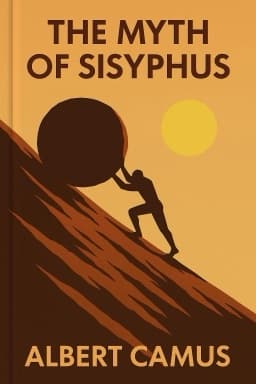
The book’s most famous image is Sisyphus, condemned to roll his boulder up the hill forever. But Camus asks us to imagine Sisyphus happy. The key is awareness: Sisyphus knows the futility of his task, but finds dignity and even joy in the struggle itself. It’s a radical idea—happiness, not in victory, but in the act of pushing the rock.
Modern Resonance: Why Camus Matters Today
In an age of uncertainty, Camus’s message is more relevant than ever. He doesn’t promise easy answers, but he does offer tools for living: lucidity, courage, and creative defiance. Whether you’re facing personal loss, societal upheaval, or just the daily grind, The Myth of Sisyphus invites you to find meaning in the struggle itself.
So next time you feel the weight of your own boulder, remember Camus’s advice: live without appeal, create beauty, and imagine yourself happy in the climb. The absurd, after all, is not the end of hope, but the beginning of a deeper, more authentic joy.
References: Camus, The Myth of Sisyphus; modern reviews and analyses 1 2 3
Want to explore more insights from this book?
Read the full book summary