
Rational Ignorance or Rational Irrationality? The Voter’s Dilemma Explained
A deep dive into why voters remain uninformed or biased and the implications for democracy

Why do so many voters remain uninformed or hold biased beliefs despite the importance of political decisions? The answer lies in the interplay between rational ignorance and rational irrationality, two concepts that challenge traditional views of voter behavior.
Rational ignorance posits that voters choose to remain uninformed because the cost of acquiring political knowledge exceeds the negligible benefit of a single vote. This cost-benefit analysis explains widespread voter apathy and ignorance but assumes that errors are random and cancel out in aggregate.
However, rational irrationality extends this idea by suggesting that voters deliberately embrace biased beliefs because these beliefs provide emotional comfort or affirm their identity. Since the personal cost of holding false beliefs is low, voters indulge in misconceptions without fear of penalty. This leads to systematic errors that shape democratic outcomes.
Classical public choice theory explains some democratic shortcomings through rational ignorance and the influence of special interests, but it falls short by assuming voter errors are random. Real-world evidence shows that voter biases are often systematic and emotionally motivated.
Politicians and media exploit these tendencies, catering to voter biases to win elections and maintain audiences. This creates a feedback loop that perpetuates misinformation and policy distortions.
Understanding these concepts is vital for anyone interested in democratic governance, political psychology, or public policy. It challenges us to rethink assumptions about voter rationality and consider institutional reforms that address these human limitations.
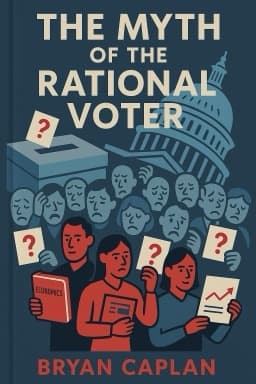
This blog synthesizes insights from Bryan Caplan’s "The Myth of the Rational Voter" and related political science literature.
References: 1 , 3 , 4
Want to explore more insights from this book?
Read the full book summary