
The Politician’s Playbook: How Voter Biases Shape Policy and Power
An insider look at how politicians and interest groups exploit voter irrationality for political gain

Democracy is not just about voters; it’s also about the supply side of politics — the politicians, special interests, and media that shape policy and public opinion. Understanding how these actors exploit voter biases is key to grasping why democratic policies often diverge from expert recommendations.
Politicians face electoral incentives to cater to voter preferences, even when those preferences are based on misconceptions. In policy areas where voters are indifferent or uninformed, politicians enjoy what is known as electoral slack — the freedom to maneuver without immediate electoral consequences. This slack enables special interest groups to lobby effectively, pushing narrow agendas that may conflict with the public interest.
Media outlets, driven by competition for viewers and readers, often prioritize content that appeals to audience biases and emotions rather than objective facts. This dynamic reinforces voter misconceptions and creates an echo chamber that sustains biased beliefs.
The interplay between politicians, special interests, and media forms a feedback loop that perpetuates voter irrationality and suboptimal policies. Politicians pander to biases to secure votes, interest groups exploit slack to influence legislation, and media amplify biases to maintain audiences.
Breaking this cycle requires institutional reforms, media literacy, and greater transparency to align political supply with informed democratic preferences.
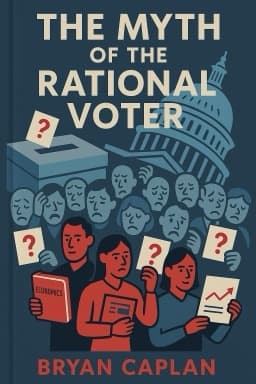
This blog draws on insights from public choice theory and political economy, including Bryan Caplan’s influential work on voter irrationality.
References: 2 , 3
Want to explore more insights from this book?
Read the full book summary