
From Plato to Popper: The Battle Between Historicism and Freedom Explained
A comprehensive journey through the philosophical clash between historicism and the ideals of an open society.

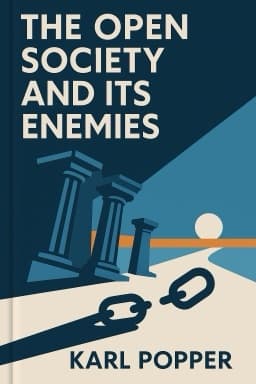
Historicism has long captivated thinkers with its promise of uncovering the laws that govern history. From Plato’s metaphysical ideals to Marx’s dialectical materialism, the belief that history follows a predetermined course has shaped political ideologies and regimes. Karl Popper’s The Open Society and Its Enemies challenges this notion, arguing that historicism is a dangerous illusion that threatens freedom.
Plato’s Theory of Forms posits eternal, perfect realities behind the changing world, inspiring his vision of a perfect, unchanging state with strict class roles. Popper reveals how this metaphysical framework underpins authoritarian political structures that suppress individual autonomy.
Plato’s sociology emphasizes that revolutions stem from internal disunity within ruling classes, driven by ambition and economic interests. This cyclical view of political decay highlights the fragility of social order and the need for institutions that can adapt and reform.
Popper’s alternative is the open society — a dynamic, pluralistic community where laws and norms are provisional and open to criticism. Embracing critical rationalism and democratic governance, the open society protects individual freedoms and fosters continuous improvement.
This blog offers readers a rich philosophical narrative that connects ancient thought to modern political challenges, illuminating the ongoing struggle between determinism and freedom.
For more detailed exploration, consult the Complete Review, Wikipedia, JSTOR, and contemporary political analyses.
Want to explore more insights from this book?
Read the full book summary