
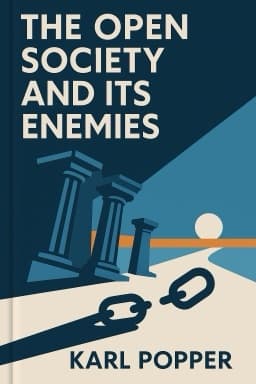
Open Society vs. Historicism: How Karl Popper’s Vision Can Save Modern Democracy
A hopeful perspective on the power of critical thinking and democratic values to overcome authoritarian threats.

In a world increasingly challenged by authoritarian impulses and dogmatic ideologies, Karl Popper’s vision of the open society shines as a beacon of hope. His critique of historicism — the belief that history unfolds according to unalterable laws — exposes the intellectual traps that lead to repression and loss of freedom.
The open society is characterized by critical rationalism: an openness to questioning, debate, and revision of ideas and norms. It values individual rights, pluralism, and democratic governance, standing in stark contrast to the rigid collectivism and determinism of historicist thought.
Popper advocates for piecemeal social engineering — gradual, evidence-based reforms that respect human fallibility and complexity. This pragmatic approach helps societies adapt without succumbing to utopian extremes or authoritarian control.
This blog elaborates on how Popper’s philosophy provides practical tools for sustaining democracy and individual freedom in the face of modern challenges. It calls on readers to embrace critical inquiry and collective responsibility to nurture open societies.
For more comprehensive information, readers can consult Complete Review, Wikipedia, JSTOR, and contemporary political analyses.
Want to explore more insights from this book?
Read the full book summary